Iran and the Netherlands have signed an MoU on expanding cooperation in the fields of agriculture, fisheries, management, livestock, dairy, sanitation and health.
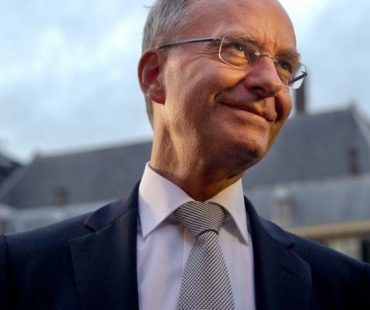
The memorandum of understanding was signed by Iran’s Minister of Agriculture Mahmoud Hojjati and Netherlands Minister of Economic Affairs Henk Kamp in Amsterdam on Friday. Hojjati heading a delegation of his deputies and representatives of Iran’s private sector has visited the Netherlands at the official invitation of the host country.
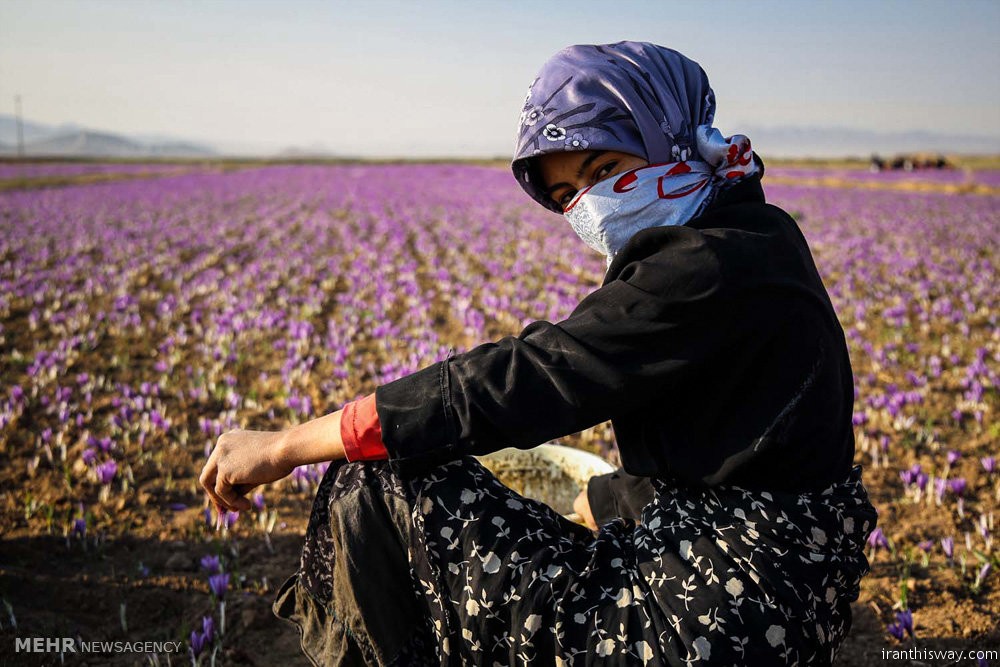
During his meeting with the Dutch Minister of Economic Affairs, Hojjati maintained that Iran is on the same level with the top countries in the world in production of certain horticultural crops such as pistachios, dates, pomegranates and apricots. He added that the Islamic Republic is making plans to increase the export of such products to new markets.
The Iranian minister then noted the various capacities of the Netherlands in agriculture and livestock, saying “the two countries can complement one another on agricultural cooperation and the MoU that will be signed today can better define the framework for this kind of cooperation between the two sides.”
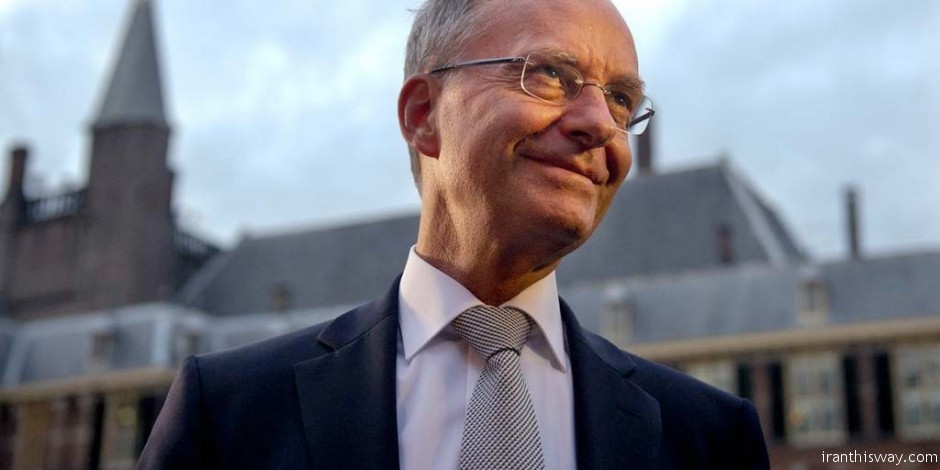
Henk Kamp, for his part, highlighted the nuclear deal between Iran and the 5+1 as a good opportunity for various countries across the world to further expand their relations with Iran.
“The exchange of delegations between the two counties in the past two years shows the expedition of developing relations, and the Netherlands is ready to boost its cooperation with Iran in all areas, including economy and agriculture,” he added.
Kamp further noted the relative advantage of the Netherlands in agricultural production, which is about five times more than the average in Europe, and called for exchange of experiences between the two countries in the field of agriculture and livestock.
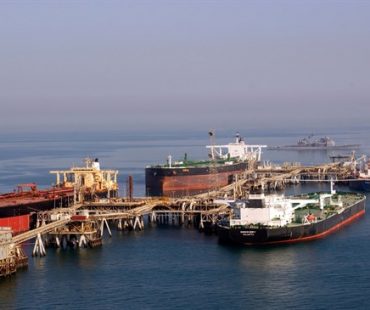
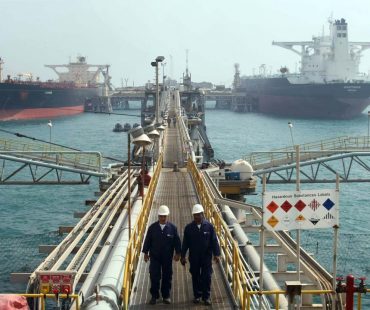
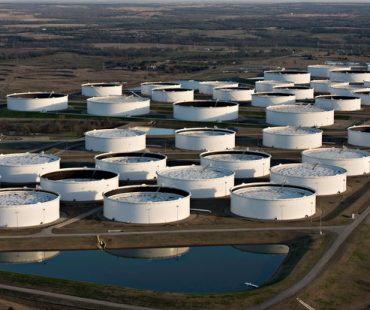
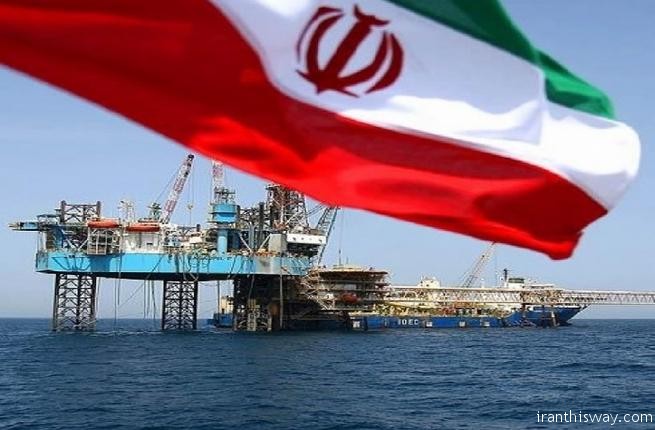
Iran Oil Terminals Company (IOTC) reported that negotiations have been held with a Dutch firm to renovate and develop Iranian oil terminals in the Persian Gulf as well as establish a floating oil terminal.
The company’s Managing Director Pirouz Mousavi said on the sidelines of Offshore Energy Exhibition and Conference (OEEC) in the Netherlands that Iran’s crude and gas condensate exports has reached pre-sanction levels, according to Mehr News Agency.
He noted that “currently, all facilities, equipment and infrastructures for storage, loading and exports on oil products have been renovated and upgraded”.
The official enumerated several areas for Iran-Netherlands cooperation including modernization of harbors, loading arms, storage facilities and Single Buoy Moorings (SBMs).
A number of SBMs used in Iranian oil terminals are Netherlands– made
He added that a number of SBMs used in Iranian oil terminals are Netherlands– made and partnership can be established for supplying required equipment.
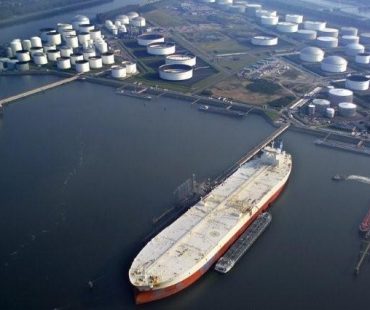
“Presently, given the refurbishment of facilities, a total of 10 oil tankers can dock at Kharg terminal which caters for 93 percent of Iran’s crude exports,” highlighted Mousavi. He considered this achievement as a great success for the country’s economy.
IOTC official added that his company will continue to update storage and export facilities of crude and gas condensate to meet international standards.
Together with domestic companies which meet most of the demand, Dutch firms can also participate in the market, he added.
“Following the removal of sanctions, the highest loading per day at Iran’s Kharg oil terminal has been more than seven million oil barrels which were received by Iranian and foreign tankers,” he concluded.
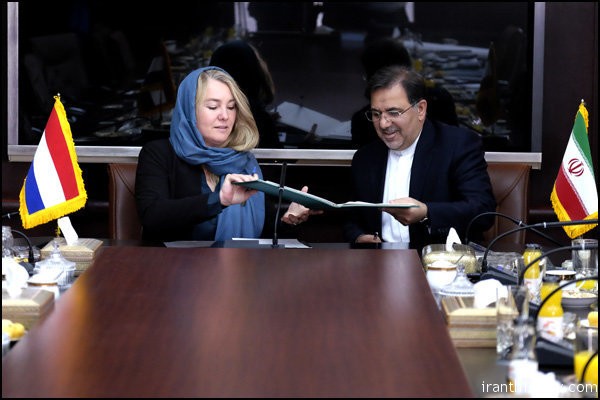
A comprehensive document for bilateral maritime transport and port cooperation was signed between Iran and the Netherlands.
The deal was sealed by Iran’s Minister of Roads and Urban Development Abbas Akhundi and Minister of Infrastructure and the Environment of the Netherlands Schultz van Haegen.
During the MoU-signing ceremony, Schultz van Haegen of the Dutch ministry said the two countries ink the deal with the aim of strategic development of maritime and port activities noting “the agreement holds great significance given the role played by both parties in their areas of jurisdiction.”
Iran’s Akhundi, for his part, pointing to the joint Memorandum of Understanding (MoU) between Tehran and Amsterdam asserting “the Netherlands remains as a major European country in the field of maritime transport as a great portion Europe’s maritime transport is carried out through Dutch ports.”
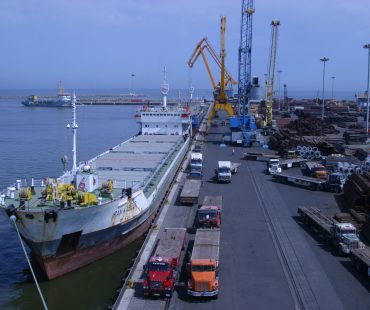
“The main axis of talks between the two states in the field of transport marks use of existing facilities to enable maritime logistics between Iran and the Netherlands,” he underlined adding “negotiations were held over development of Phase 3 of Shahid Rajaee Port as well as Chabahar port for the Dutch side to take part in Iran’s port tenders in case of willingness.”
The Iranian minister further pointed to the held talks over road transport adding “presently no MoU exists between the two sides though Iran has made a proposal for study to the Dutch minister and the results would hopefully lead to an agreement in future.”
“Currently, a total of 800 Iranian trucks commute to the European country and the draft of an MoU has been inked,” he maintained.
Minister: Iran-Netherlands flights in recent days stating that the first KLM flights was performed and direct flights will hopefully be boosted in near future.
Abbas Akhundi also touched upon resumption of Iran-Netherlands flights in recent days stating that the first KLM flights was performed on Sunday and the number of direct flights will hopefully be boosted in near future.”
“Iran requires comprehensive cooperation with the Netherlands in order to restore new corridors between Europe and the East,” commented the official.
It is worth noting that the recent MoU between Iran and the Netherla.nds was inked in Tehran and covers several areas including bolstering of port and maritime ties, investment, formation of a joint committee, exchange of experts, training of managers as various levels, practical measures as well as development of logistic procedures.
Tehran and Amsterdam plan to promote trade ties based on a defined road map observed Iran’s ambassador to the Netherlands while highlighting the significance of relations between the two countries.
Alireza Jahangiri, who was speaking at Erasmus University in Rotterdam, added that grounds are prepared for closer cooperation between the Islamic Republic and the Netherlands in many fields, Tasnim News Agency reported.
Therefore, he noted, the two countries have devised a roadmap to promote relations.
“Given the advantages of doing business with the Islamic Republic of Iran, European countries have taken huge steps to boost economic cooperation with Iran over the past two years, especially following the nuclear deal,” he noted.
Earlier last month, Jahangiri and president of the Netherlands’ central bank (De Nederlandsche Bank), Klaas Knot, in a meeting in The Hague discussed ways to boost banking interactions between the two nations.
The talks come against the backdrop of a new wave of interest in ties with Iran after Tehran and the P5+1 (Russia, China, the US, Britain, France plus Germany) agreed on the text of a comprehensive 159-page deal on Tehran’s nuclear program on July 14, 2015 which went into force on January 16.
The comprehensive nuclear deal, known as Joint Comprehensive Plan of Action (JCPOA), terminated all nuclear-related sanctions on Iran.
Renowned Iranian painter and educator Mahmoud Farshchian has passed away, as announced by the Academy of Arts on Saturday. He died at the age of 95 while hospitalized in the United States.
Born in the historic city of Isfahan in 1930, Mahmoud Farshchian was also a member of the Iranian Academy of Arts. His artistic journey began when his father enrolled him in the workshop of Haj Mirza Agha Emami, a prominent traditional artist. He later pursued further studies at the Isfahan School of Fine Arts under the guidance of Master Issa Bahadori.
Farshchian was the pioneer of a unique style and school within Iranian painting. While remaining true to the authentic foundations of this traditional art form, he expanded the horizons of Persian painting through innovative techniques.
Childhood: Nature, beauty, & family Isfahan, Iran 1930 Born in Isfahan in 1930, Mahmoud Farshchian grew up in the proximity of Isfahan’s royal mosque, where the architectural masterpieces of the Safavid dynasty informed his understanding of art and beauty. No place in the world could have provided a better ambiance for the education of a traditional Persian artist. As a child, it was already clear that his life would be devoted to painting.
Ahmadabad & The Chicken House Farshchian’s natural genius was nourished by his family’s deep appreciation for art in all its forms. Farshchian’s family home in the Ahmadabad neighborhood of Isfahan included trees, water fountains, pools, and a section called the Chicken House. His childhood memories of playing with the hens, roosters, pigeons, and sparrows are evident in his masterful depiction of their colors, feathers, and movements. Beyond their physical appearance, Farshchian paid keen attention to their different moods and personalities. “There was this particular white rooster that was so friendly with me,” he remembers.
“I carried food for him in my pocket, and he would push his head into my pocket and eat them.” “When a drop of light falls into the glass of a human soul, what would it create with love?” -M.F.
Home & Family Farshchian’s father Gholamreza was a successful Persian carpet dealer, and the home was furnished with antiques, Cretonne curtains, and many carpets woven by the masters Archang (Ahmad Hartamni) and Mirza. Father would sit, arms crossed, watching in silence for hours as his young son drew the carpets’ lines and patterns. He would just look at me from the corner of his eyes. It was then that I realized the effects of my passion for art in my life. Farshchian’s parents shared a genuine love of God and religion. His mother Zahra would take her children to the Imamzadeh Ismael shrine near their house, where Farshchian would make pencil copies of the shrine’s many paintings of events of Karbala and Ashura. The shrine had a plane tree that was burnt from inside, an image that appears in many of Farshchian’s paintings. A pilgrimage to Karbala in the 1940s affected Farshchian deeply, as revealed in his designs for the new tomb of Imam Hussein decades later.
“I get my art-loving spirit from my father. Although he was a businessman and trader, he admired art….That’s how I developed my passion for art.” -M.F.
Six Months of Darkness At the age of five, Farshchian fell into the courtyard pool and almost drowned. Zahra saved his life by reaching in and pulling him out by his hair. His swirling, circular compositions reflect this harrowing near-death experience. “I have had a brush with death and struck by the evil eye several times in my life.” M.F.
Gholamreza and Zahra were avid readers, and together they amassed a library containing hundreds of rare books and manuscripts. Every Friday, family and friends gathered in the family home to recite The Book of Kings, Saadi, poems, and literary maxims. Once when Farshchian was six years old, he fell and hit his head running upstairs to fetch a Book of Kings from his mother’s reading shelf for his father and their guests. The accident left the young boy completely blind for six months. When the bandages came off, Farshchian experienced a psychedelic rush of colors. His vibrant, rainbow palette reflects his joy upon recovering his sight.
Education: A Young Artist in Golbahar school Farshchian studied with the greatest masters of Persian art and literature in Isfahan. At Golbahar, the prestigious public school he attended, his teachers praised Farshchian’s artistry and encouraged him to study with Haj Mirza Agha Emami, an artist, carpet designer, and giant of Iranian Modernism. Farschian so impressed Haj Mirza with his talent, passion, and humility that he agreed to train the young student.
Haj Mirza Haj Mirza taught Farshchian how to draw a gazelle. “When I got home, I was so excited,” Farshchian recalls. “I stayed up all night and drew about 200 gazelles: big ones, little ones….I felt like something was changing within me.” The next day, he took his portfolio to show the gazelles to Haj Mirza, who could not believe his eyes. He asked if Farshchian had drawn them all by himself or if he had traced them. “No, sir, I’d never do that. I just drew them,” Farshchian answered. Haj Mirza instructed Farshchian to draw a gazelle in his presence. After finishing quickly, Haj Mirza kissed him on the forehead and said, “You’ll become great! Work hard.”
Farshchian became Haj Mirza’s apprentice and continued to draw in pencil for four more years, mostly emulating Timurid and Safavid drawings. Then Farshchian began to study painting. Eventually, the precocious boy was helping carry out the studio’s commissions. The gazelle still holds a special place in Farshchian’s heart and appears throughout his body of work. “I always got a perfect score, 20/20, in drawing, composition, literature, and other abstract lessons. Unfortunately, I was so untalented when it came to math.” -M.F.
School of Fine Arts, Isfahan Farshchian next attended the School of Fine Arts in Isfahan, where he kept the following sentence framed above his desk: “I should become a genius.” He studied miniature painting, drawing inspiration from the designs and tile patterns of Isfahan’s architectural monuments. Farshchian mastered the intricacies of pigments, binding mediums, and prepared his own brushes from white kitten hairs tied into bird quills tools so fine and flexible that he still uses them for delicate passages. Farshchian learned carpet design from the late master Issa Bahadori, who taught “with passion and love.” Farschian’ s artworks were gifted to every celebrity or diplomat who visited Iran. Farschian also passionately studied literature, especially the poetry of Hafiz, Saadi, and Rumi. He and his friends would often attend poetry recitals at the Kamal Ismael Society, the Khakshir Society near the Jame’a Mosque, and the Poets Society behind the Chaharbagh School.
Adulthood: Around the World First Solo Exhibition, 1948 Upon graduation from the School of Fine Arts, Farshchian held his first solo exhibition in 1948 at the Iranian-British Cultural Association’s office in Isfahan.
The Army Like all Iranian boys, he was conscripted into the army at the age of eighteen. In awe of his artistic talent, his comrades and superiors allowed him to skip the drills so he could keep drawing and painting.
Vienna, Munich, & Paris After performing his military service, Farshcian’s hyperpolyglot nature took him on a Grand Tour to absorb Western painting techniques. He enrolled at the Academy of Fine Art in Vienna, taking several trips to cities like Munich and Paris. Wherever he went, he would spend all his time at the museum.
“I was so passionate and thirsty….Every morning I would wait outside museums with my papers and pencils, and I’d go inside when they opened the doors, and I kept drawing and drawing….I continued working ‘till late in the afternoon when they wanted to close the doors.” -M.F.
The Years In Between: Ostad Farshchian
The National Institute of Fine Arts, 1961 In 1961 at the age of thirty, Farshchian returned from his European tour to teach at The National Institute of Fine Arts (later The Ministry of Art and Culture).
The Department of National Arts He organized exhibitions at the University of Tehran, where he rose to the position of Director of the Department of National Arts. He also designed carpets and worked so successfully in Syria that one of his vases was presented to Arthur Pope, the famous American scholar of Iranian art.
Istanbul, 1960: first international exhibit Returning from one of his trips to Europe, Farshchian held exhibitions in the Chechen Sotoun Palace Museum in Isfahan, the Golestan Palace Museum, the Ministry of Art and Culture, University of Tehran, and the Museum of Ancient Iran. Farshchian’s first international exhibition was in 1960 in Istanbul, a watershed moment that sparked multiple exhibitions across the globe. His first exhibitions in the USA were in 1972 and 1973.
Family: A Husband & Father Marriage, 1954 Friends since childhood, Mahmoud and Nia married when she was seventeen and he was twenty-four years old and welcomed two, later to become three, children. The first five years of their marriage were monumental for Farshchian’s career, as during this time she encouraged him to pursue his passion in the studio while she tended to the children, leading to his development and refinement of Surrnaturalism, the unique style for which he would be known.
Women Farshchian drew upon his love for Nia as a constant inspiration for his work, and many of his paintings depict beautiful women in paradisiacal settings.
“I mostly draw women as angels in my work. Kind, compassionate women are indeed like angels. They are precious.” -M.F.
The Iranian Revolution, 1979 The 1979 Iranian Revolution and tumultuous years after became a turning point for Farshchian and his family. With many friends arrested, exiled, and fleeing the country, Farshchian made the decision to leave Iran with his wife and children and began to seek out a new home.
His painting entitled “Quo Vadis/Where Are You Going?” describes the feeling that he, and 20 million other Iranians, had as friends disappeared and communities disintegrated during the revolution that would topple the last shah.
A Modern Master America, 1983 Farshchian retired from teaching in 1980 and relocated to America with his family in 1983, settling in Englewood Cliffs, New Jersey, just across the Hudson River from New York City. There they raised their children and grandchildren and Farshchian continued to paint and take on projects in the U.S.A. and internationally.
Honors & Awards He is included in Cambridge University’s list of the 2000 outstanding intellectuals of the 21st century and The European Academy of Culture’s Who’s Who in the 21st Century. Farshchian belongs to the Art and Professions Association of Italy and has received numerous awards and honorary memberships from universities and art centers across Europe and the USA.
International Acclaim Farschian’s paintings are in the private collections of H.R.H. Queen Elizabeth II of England and Prince Philip, Queen Juliana of Netherlands, Prince Agha Khan, Crown Prince Akihito of Japan, former presidents and prime ministers of the US, France, Italy, Brazil, and India, William Fulbright, Arthur A. Pope; and Michael Jackson, among others.
There have been six books and countless articles published on his work, as he comes to be recognized as playing a decisive role in introducing Iranian art to the international art scene as well as broadening the possibilities and scope of traditional Iranian painting.
The Farshchian Museum In 2001, The Farshchian Museum opened to the public in Isfahan. His works are also permanently installed in Farshchian Hall at The Astan Ghods Razavi Museum and in the Museum of Contemporary Arts, Mashhad. “Art is a sacred matter. It’s a kind of worship. It’s like serving God.” -M.F.
Farewell to Master Mahmoud Farshchian: A Heartfelt Funeral Ceremony in Isfahan
The funeral ceremony for Master Mahmoud Farshchian took place on Sunday evening, August 19, 2025, at the Isfahan School of Fine Arts. The event was attended by Minister of Culture and Islamic Guidance Seyyed Abbas Salehi, along with various officials and members of the public.
The esteemed artist was laid to rest beside the grave of the renowned Iranian poet Saeb Tabrizi.
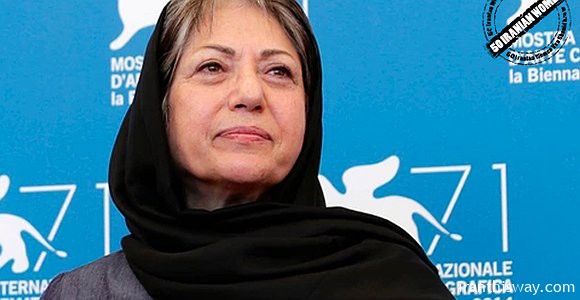
Celebrating Women’s History Month (March 1-31), IMDb published a video on Twitter to take a look back at “cinematic history in salute of the pioneering women directors and their groundbreaking work,” the online entertainment database tweeted along the video that featured scenes of Bani-Etemad’s 2014 drama, Tales (Ghesseh-ha).
Born in Tehran in 1954, Bani-Etemad – who holds a Bachelor of Arts degree in film studies from the Dramatic Arts University in Tehran – is widely considered as the most important female director in Iran, titled ‘First Lady of Iranian Cinema’.
Her movies and documentaries picture social and cultural issues and complications in modern-day Iran.
The Tales – which adopts an episodic narrative – portrays the fates of seven characters of Bani-Etemad’s previous flicks.
The film won the award for Best Screenplay (written by Bani-Etemad and Farid Mostafavi) at the 71st Venice International Film Festival.
It also brought Bani-Etemad the Golden Royal Bengal Tiger Award – dedicated to best film – at Kolkata International Film Festival in 2014, as well as the Special Jury Prize at Asia Pacific Screen Awards (Australia) in the same year.
Also featured in IMDb’s short video were the likes of Sofia Coppola, Jodie Foster, Meryl Streep, Chinese-American film director Lulu Wang, Sarah Polley, and Barbra Streisand.
Rakhshan
Banietemad, born in 1954 Tehran, began to make documentaries for the
Iranian National Television in 1979, right after graduating from the
University of Dramatic Arts, Tehran. From 1979 to 1987 she focused on
making only documentaries. In 1987, she directed her first feature film Off the Limits. In 1991, she became the first woman recipient of the Best Director award for Nargess at Fajr International Film Festival in Iran. In 1995, she won the Bronze Leopard for The Blue Veiled at the Locarno Film Festival. Under the Skin of the City, her next film, was the highest grossing film in Iran in 2000. This film along with Gilaneh(2005) and Mainline(2006), garnered major awards in more than 50 film festivals.
While Banietemad’s feature films have
been acclaimed and honored worldwide, her documentaries have also been
successful and popular internationally. Our Times …,
was the first documentary ever to be released in the movie theatres in
Iran in 2002. It was also screened in highly prestigious and prominent
festivals and TV channels such as IDFA, Sundance Film Festival and ARTE.
Banietemad started her work by making
documentaries and has never ended the strong connection she has always
had with her works. Making documentaries have been her main way of
connecting with the society and social issues. Her approach and in
depicting social issues has been so strong and effective that her works
have always resulted in causing change in the lives of her
documentaries’ characters.
In 2008, she received an honorary
doctorate from University of London, in 2010, she was awarded the Prix
Henri Langlois from Vincennes International Film Festival. Her latest
feature film, Tales, was awarded the Best Screenplay prize in the main competition section of 2014 Venice International Film Festival.
More recently, she has joined the Academy Oscar, Writers branch in 2017.
Honorary Doctorate, University of London (Iran), 2008
Master Class, School of Oriental and African Studies, SOAS (England), 2008
Master Class, Geneva University of Art & Design (ESBA), 2008
Jury Member, Cinema Verite Int’l FF (Iran), 2007
Jury Member, Women’s Film Festival (Iran), 2006
Jury Member, Asian Cinema, Fajr Int’l FF (Iran), 2006
Jury Member, Art University Student Festival (Iran), 2005
Director, Sony Young Directors Film Festival (Iran), 2003
Jury Member, Asia Pacific Film Festival (Iran), 2003
Jury Member, Sony Young Directors Film Festival (Iran), 2002
Jury Member, Moscow Int’l FF (Russia), 2002
Jury Member, Cairo Int’l FF (Egypt), 2002
Jury Member, Fajr Int’l FF (Iran), 2001
Jury Member, Montreal Int’l FF (Canada), 2001
Jury Member, Youth Film Festival (Iran), 2001
Jury Member, Student Film Festival (Iran), 1999
Jury Member, Leipzig Int’l FF (Germany), 1999
Jury Member, Tokyo Environmental Int’l FF, (Japan), 1998
Jury Member, New Delhi Int’l FF (India), 1998
Jury Member, Student Film Festival (Iran), 1997
Jury Member, Locarno Int’l FF (Swiss), 1996
Jury Member, Turin Int’l FF (Italy), 1995
Jury Member, Center for Iranian Film Directors (Iran), 1993
Jury Member, Roshd Film Festival (Iran), 1992
Jury Member, Fajr Int’l FF (Iran), 1990
KÂRÂ FILM STUDIO
KARA Film Studio is a name under which a group of professional Iranian filmmakers express their common concerns regarding humanistic, social and cultural issues through documentary films, while maintaining their own diverse and distinct vision. In KARA Film Studio, filmmakers in small or large numbers, gather together and, starting with an outline of a documentary project, complete the work in a professional manner.
KARA Film Studio operates under a number of principles: personal financing or financing through private sector; working as teams and in a workshop from development of an idea through to its completion and distribution; giving young and talented documentary filmmakers an opportunity to work with professionals and assistance with their development, due respect for the audience by maintaining high standards in the production phase, endeavor to provide improved and increased means of screening films inside and outside Iran; … Rakhshan Banietemad and Mojtaba Mirtahmasb are the constant participants in this group.
The 36th Fadjr International Theater Festival (FITF) ended in a ceremony after announcing the winners in different categories.
In the international competition section Best Play Award was jointly presented to ‘The History Boys’ by Ashkan Khalilnejad, and ‘Melancholy of the Dragons’ by Philippe Quesne of France, honaronline.ir wrote.
Khalilnejad also received the Best Directing Award and Best Stage Design Award for ‘The History Boys’.
Mehdi Ziachamani won the Best Playwriting Award for ‘The Omissions’.
Special Jury Award for Best Dramatic Composition and Best Acting Award (male) went to Masoud Delkhah for ‘Mephisto’ and Morteza Esmaeil-Kashi respectively.
The Best Costume Design Award went to Neda Nasr for ‘The List of the Dead’.
Best Offstage Play (Unusual Places) was given to ‘Guilty Landscapes’ by Dries Verhoeven (the Netherlands).
The 36th Fadjr International Theater Festival was held from January 18 to 28 in Tehran.
Winners
Best Play Award:
Jointly won by ‘The History Boys’ by Ashkan Khalilnejad, and ‘Melancholy of the Dragons’ by Philippe Quesne, France
Best Directing Award:
Ashkan Khalilnejad for ‘The History Boys’ – Iran, Tehran
Best Playwriting Award:
Mehdi Ziachamani for ‘The Omissions’ – Iran, Mashhad
Special Jury Award for Best Dramatic Composition:
Masoud Delkhah for ‘Mephisto’ – Iran, Tehran
Best Acting Award (male):
Morteza Esmaeil-Kashi for ‘Mephisto’ – Iran, Tehran
Best Acting Award (female):
Katja Bürkle for ‘Hamlet’ – Germany
Best Stage Design Award:
Ashkan Khalilnejad for ‘Boys of History’ – Iran, Tehran
Best Costume Design Award:
Neda Nasr for ‘The List of the Dead’ – Iran, Tehran
Best Music/Sound Design Award:
Valentijn Dhaenens for ‘Big Mouth’ – Belgium
Best Offstage Play (Unusual Places):
‘Guilty Landscapes’ by Dries Verhoeven – The Netherlands
Special Mention:
Remote Tehran, Rimini Protocol Company – Germany
The 36th Fajr International Theater Festival was held January 18 to 28 in Tehran.
India, the world’s No. 3 crude oil consumer, received about 266,000 barrels per day (bpd) of oil from Iran in November, according to a review of tanker arrival data from trade sources and numbers available on Thomson Reuters Eikon.
For April-November, the first eight months of this fiscal year, India shipped in about 427,200 bpd, according to the data reported by Reuters.
But India’s oil imports from Iran will likely rise in December, as vessels holding about 4 million barrels of oil sailed from the Iranian ports in end-November and discharged cargoes in early December, the data showed.
Iran has cut oil prices in efforts to retain Asian customers and boost the appeal of its crude compared with other Middle Eastern supply.
Overall India imported 4.7 million bpd oil in November, meaning growth of about 12 percent from a year ago as the country raised its refining capacity.
First deputy oil minister in November announced that Iran has turned to customers in Europe to shore up its crude oil exports.
Iran is in negotiations to secure new buyers in Europe, Marzieh Shahdaei said.
Shahdaei said some of our customers in Asia have reduced imports, but that does not undermine Iran’s crude exports.
Refiners in Italy, France, the Netherlands, Greece and Turkey are the biggest customers of Iranian crude in Europe.
IOTC managing director said storage duration in Iranian crude oil terminals has climbed to 15 days.
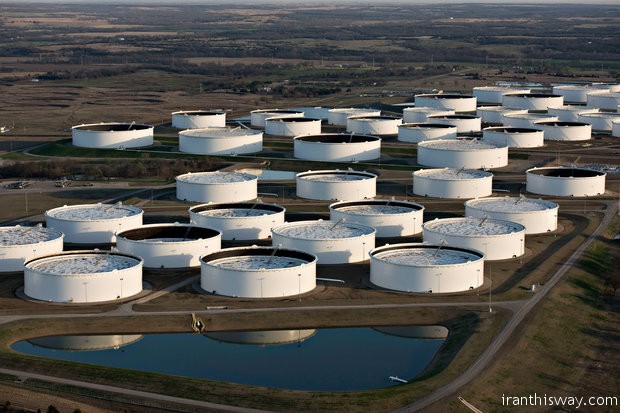
Managing Director of Iran Oil Terminals Company (IOTC) Seyed Pirouz Mousavi said oil can now be stored for as long as 15 days without the need for exports.
“Iran’s oil storage capacity has currently reached global standards with implementation of 10 million barrels of new capacity in Bahregan district as a backup for Kharg Oil Terminal,” he added.
The official highlighted that operation of new tanks not only has boosted storage duration to 15 days but also increased crude storage capacity of the country’s terminals by about 35 per cent.
“The rise in crude storage capacity, in addition to strengthening Iran’s bargaining power for commerce and sales of oil, will elevate the quality of export products.”
He recalled that construction and implementation of new storage tanks will lower risks of production cuts and transfer of oil to Kharg Terminal, as the country’s largest crude terminal.
Mousavi further deemed increased oil exports throughput as yet another advantage of the new oil storage project adding “upon operation, the possibility will be provided for regular and overhaul of crude oil storage tanks at Kharg Terminal.”
Implementation of new tanks for storing 10 million barrels of Iranian crude earlier this month, the country’s overall capacity rose to 38 million barrels. The project also comprises design, construction, installation and operation of eight one-million-barrel tanks, two 500-thousand-barrel tanks as well as four 250-thousand-barrels tanks for storing crude oil.
Iran’s oil terminals remain as the last link in the chain of oil and gas production and presently over 90 per cent of the country’s crude oil is being deployed to global markets through Kharg Terminal.
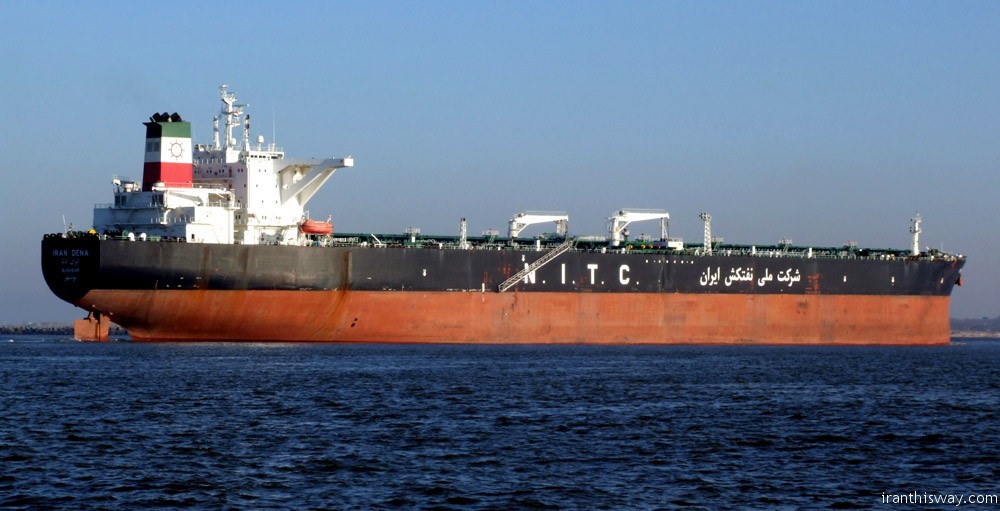
NITC head announced that 35 Iranian tankers have been leased out to oil companies in Europe like Spain’s Cepsa and Eni of Italy.
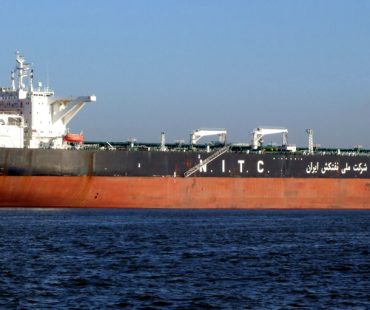
New Managing Director of the National Iranian Tanker Company (NITC) Sirous Kianersi described latest status of oil displacement agreements between NITC and huge European oil companies saying “so far, 35 contracts have been inked with European sides for taking out leases on 35 Iranian tankers.”
The official stated that the 35 lease contracts had been signed with oil giants from various EU states like Greece, Spain, Italy and the Netherlands asserting that the deals were spot contracts which were sealed for transport of crude oil.
He highlighted that Iranian tankers enjoyed highest standards for transference of crude oil in ports and oil terminals of the European Union (EU); “so far, agreements have been signed with majority of European oil firms like Spain’s Cepsa, Italy’s Eni in addition to Greek and Dutch companies.
In view of post-JCPOA conditions and removal of restrictions, more agreements will be sealed with European oil giants for displacement of crude oil, the official reiterated.
Last week, Kianersi had reported on berthing of Iranian oil tankers at EU oil terminals stressing that the first Iranian tanker had tied up at a Spanish socking site.
For the first time ever, an Iranian tanker, which has been lent out to a large Spanish oil company, moored at Algeciras port of the European state.