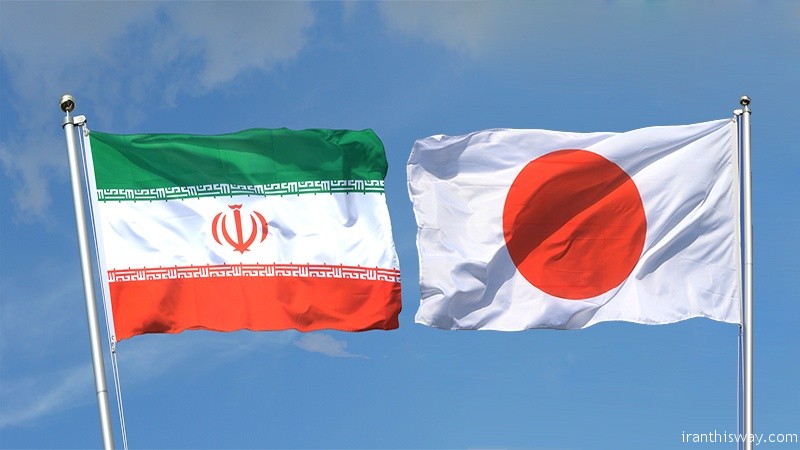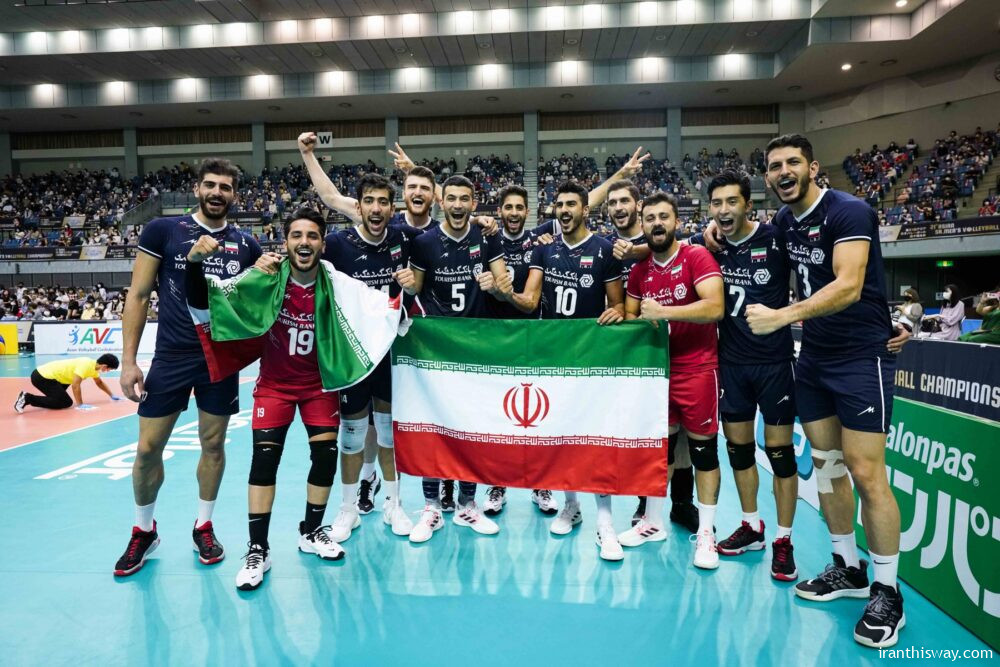
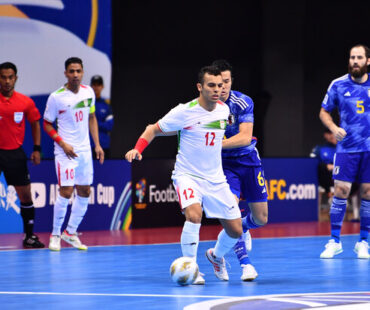
Iran’s national futsal team, after accepting defeat against Japan in the final of 16th edition of the Asian Futsal Cup, failed to repeat the championship title in this competition, and Japanese team won the cup for 4th time.
The final match of the 16th Asian Futsal Championship was held between the two powerful teams of Iran and Japan, and in the end, it was the Japanese team that won the championship title.
In this match, which was held at the Saad Al-Abdullah Sport Hall Complex in Kuwait at 20:30 (local time), Japan defeated Iran, the most honored team of Asia, 3-2 and crowned the title of championship.
In this edition of the competitions, Iran national futsal team reached the final without losing and lost against Japan.
Iran trounced Vietnam in the quarterfinal of AFC Futsal Asian Cup 8-1 on Tuesday.
In the semi-final, Iran National Futsal Team defeated Thailand 5-0.
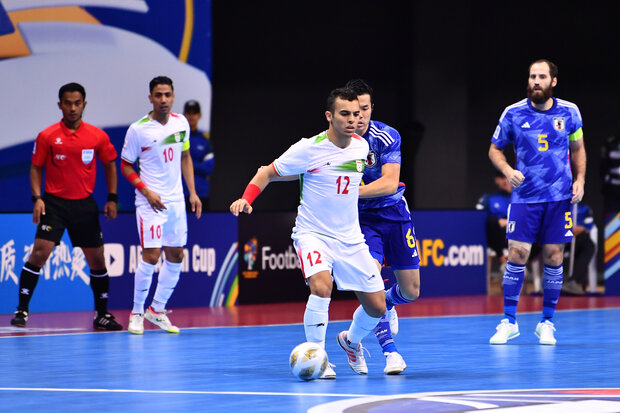
Iran’s national futsal team, after accepting defeat against Japan in the final of 16th edition of the Asian Futsal Cup, failed to repeat the championship title in this competition, and Japanese team won the cup for 4th time.
Final Match Report of AFC Futsal Asian Cup 2022
Iran, who had scored 37 goals en route to reaching the final, started as aggressively as ever with Hossein Tayebi and Alireza Rafiei Pour making early attempts at goal.
As head coach Kenichiro Kogure had anticipated, Japan were forced to play defence against Iran’s incessant pressure, with their best chances coming from counter-attacks and set-pieces.
Japan captain Arthur Oliveira, however, nearly stunned the defending champions in the eighth minute when his attempt off Soma Mizutani’s pass rocked the crossbar.
Iran almost paid a price again for their aggression a minute later after committing a foul at the edge of the box, but Oliveira’s free-kick was superbly saved by Saied Momeni.
Iran, however, continued to play their style of attacking futsal and after 15 minutes of testing Guilherme Kuromoto, Saied Ahmad Abbasi collected Mahdi Karimi’s pass and let loose a superb shot into the bottom right corner to open the scoring.
Japan, the only other team to have won the AFC Futsal Asian Cup, were unfazed and drew level a minute later when Mohammedhossein Derakhshani failed to intercept Kuromoto’s long-range throw into the final third, allowing Kazuya Shimizu to equalise with a brilliant right-footed shot.
Iran looked to close the first half strongly but Tayebi and Abbasi’s efforts were denied by Kuromoto’s quick reflexes as both sides entered the halftime break with the title still very much up for grabs. Iran’s waves of attacks continued in the opening minutes of the second half with Abbasi and Moslem Oladghobad forcing parries out of Kuromoto in the opening minutes but Rafiei Pour’s foul on Shimizu in the 27th minute gave Japan a lifeline.
Oliveira stepped up to take the free-kick and the skipper made no mistake as he smashed his effort home to put Japan ahead for the first time. The goal stunned Iran – who had only conceded two goals in their previous five matches – into action as they increased the intensity of their attacks in search of the equaliser.
Iran would have equalised moments later through Abbasi’s strike if it weren’t for Kuromoto’s fine save, with the keeper standing tall against Salar Aghapour’s effort in the 29th minute to maintain Japan’s lead. With the clock ticking, Iran head coach Vahid Shamsaee employed power play for the first time in Iran’s campaign with Tayebi donning the keeper’s jersey in the 36th minute.
Tayebi came closest in the 39th minute with his strike deflecting off the upright but there was to be more woe for Iran with Abbasi slotting the ball into the back of his own net in the final 30 seconds.
Iran pulled one back through Alireza Javan Shahkali with a second left on the clock but it was meant to be Japan’s final to celebrate.
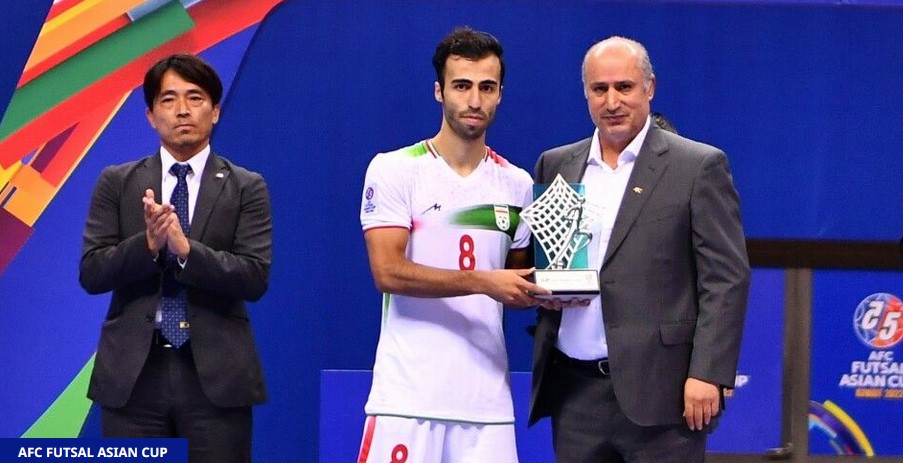
Iran’s Moslem Oladghobad was named the AFC Futsal Asian Cup™ Kuwait 2022 Most Valuable Player.
Oladghobad scoops Most Valuable Player Award
Iran’s Moslem Oladghobad was named the AFC Futsal Asian Cup™ Kuwait 2022 Most Valuable Player on Saturday.
Oladghobad, famed for his precision passing, helped Iran garner wins over Indonesia (6-0), Chinese Taipei (10-1) and Lebanon (9-0) with the 26-year-old scoring twice in the group stage.
The forward found the net once in Iran’s 8-1 quarter-final win over Vietnam before scoring twice in the semi-final against Thailand.
Although Iran were denied a record-extending 13th title by Japan, Oladghobad’s quality was for all to enjoy and admire throughout Kuwait 2022.
AFC congratulates Tayebi on receiving Yili Top Scorer award
Asian Football Confederation (AFC) congratulated Iran’s futsal captain Hossein Tayebi on receiving the Yili Top Scorer award at the 16th edition of the Asian Futsal Cup.
According to Asian Football Confederation (AFC) website on Saturday, the skipper –Tayebi – displayed an amazing performance, scoring 10 goals in six matches as Iran finished runners-up to Japan after a pulsating final.
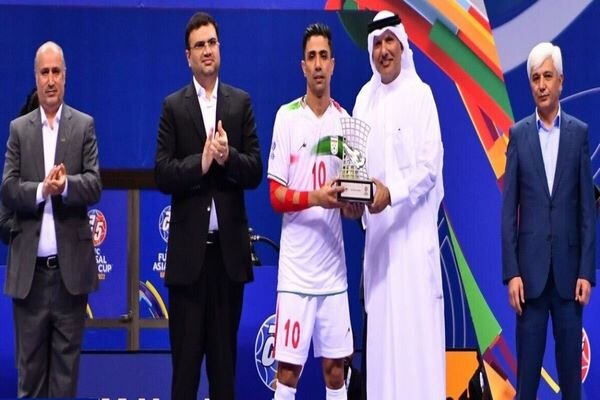
AFC describes Tayebi’s performance as follows:
The award is a testament to Tayebi’s talent and determination, as he has maintained the fine performance that also saw him picking up the Top Scorer Award in the 2014 and 2018 editions.
The 34-year-old scored six goals in the group stage to help Iran finish top in Group C, before netting a hat-trick against Vietnam in the quarter-finals.
Tayebi then followed it up with a first-minute goal against Thailand in the semi-final that laid the foundation for a 5-0 win.
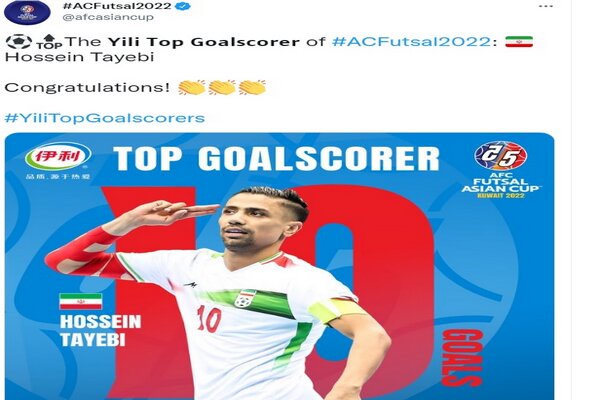
Accordingly, the AFC’s official Twitter account released a poster of the Iranian captain congratulating him on the award.
Earlier, Iran’s national futsal team, after accepting defeat against Japan in the final of the 16th edition of the Asian Futsal Cup, failed to repeat the championship title in this competition, and the Japanese team won the cup for the 4th time.
An NIORDC official has reported on talks between Iran and Japan over implementation of a two-billion-euro project for upgrading Abadan Oil Refinery.
Managing Director of Abadan Oil Refinery Company Esfandiar Daemolzekr informed reportes about the latest development status of and the plan to reduce fuel oil production in the oldest oil refinery of the Middle East saying “in partnership with China’s Sinopec, the plan to equip, develop and upgrade Abadan refinery will kick off as of the new Iranian calendar year (to begin March 21).”
The official recalled that the second development contract was inked with the Chinese side following implementation of the Joint Comprehensive Plan of Action (JCPOA) asserting “the initiative aims to boost profitability and reduce fuel oil production form the current 40% to less than 20 per cent.”
He emphasized that the refinery project required three billion dollars of investment adding “desalination units and those for purification of diesel and kerosene will be also expanded.”
On the third development phase of Abadan refinery, Daemolzekr said about 40 per cent of crude oil is currently turned into fuel oil due to ageing distillation units though reduction of fuel oil output has been put on the agenda.
He underlined that 8000 jobs will be created during five years of developing phase two of the Iranian refinery highlighting that for expansion of Abadan complex phase 4, talks are underway with a Japanese firm and a contract will be inked soon.
He referred to the held negotiations with Japan’s JGC Corporation Engineering company for carrying out the fourth development phase of Abadan Oil Refinery maintaining “the project will require nearly two billion euros of financing and it will reduce fuel oil output to less than 10 per cent.”
The official at National Iranian Oil Refining and Distribution Company (NIORDC) went on to stress that Abadan Oil Refinery began operation about 107 years ago with an initial output of 2700 barrels though its production figure has fluctuated over years.
“The refinery is currently supplying 25 per cent of the country’s gasoline demand,” noted Daemolzekr concluding “Abadan Oil Refinery is presently yielding seven million liters of Euro-4 gasoline and 100LL avgas per day.”
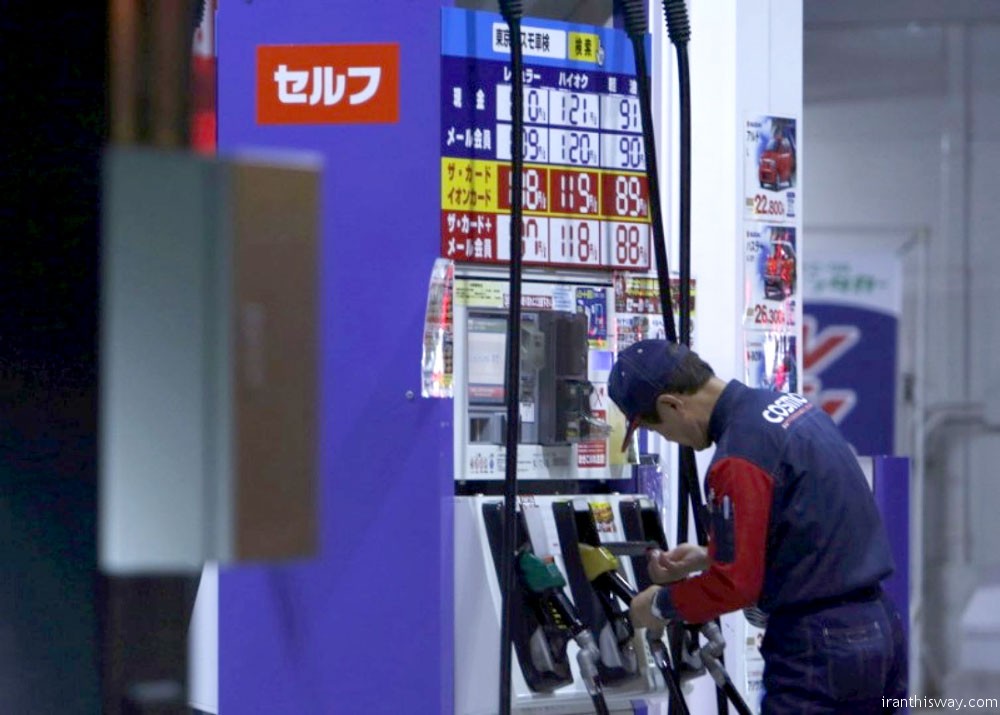
Following exports of the first naphtha cargo to the United Arab Emirates by OPEC Affairs Department of the Ministry of Petroleum, a second package, with a volume of 280 thousand barrels, has been deployed to Japan.
The second shipped cargo is expected to reach destination in coming days.
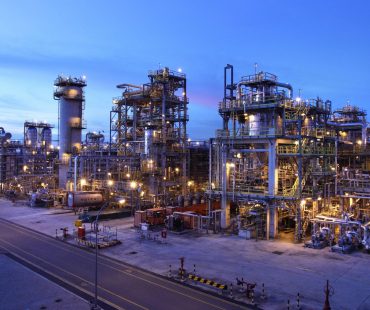
Setareh Khalij Fars Refinery, as the first condensate-based refinery, enjoys a capacity of 360 thousand barrels per day and comprises distillation units, liquefied gas refining, catalytic converter, naphtha refining, isomerization, refined kerosene and gas oil.
Situated in vicinity of Bandar Abbas refinery, the complex is in final stages of construction and aims to produce gasoline, diesel, LPG and jet fuel.
The required feed for Setareh Khalij Fars Refinery will be supplied through a 485-km pipeline derived refineries of South Pars gas field.
Upon completion, the project will increase the country’s gasoline and gas oil output capacity by 36 and 14 million liters respectively.
Also, Setareh Khalij project is expected to yield four million liters of LPG, three million liters of jet fuel as well as 130 tons of sulfur per day. The refinery enjoys about 11 million barrels of capacity for storing petroleum products.
Iran started exporting condensate — a form of ultra light oil — from two newly launched phases of its giant South Pars Gas Field to Japan.
Managing Director of National Iranian Oil Terminals Company (NIOTC) Pirouz Mousavi was quoted by Press TV as saying that the Japan-bound consignment contained 160,000 barrels of condensate from South Pars phases 20 and 21.
He added that a 300-ton Japanese vessel had lifted the consignment from phases 20 and 21 as well as another from phases 2, 3, 4 and 5.
He did not specify how much had been loaded from other phases but it could stand at several hundred of thousands of barrels.
Mousavi added that the vessel — named ‘Fujikawa’ — was also to load 650,000 barrels of crude oil from Iran’s Forouzan oilfield before leaving for Japan.
Iran announced in December that it was already expanding the market for its condensate, which can be used to make both fuel and plastic.
Masoud Hassani, the managing director of South ParsGas Complex, told the domestic media at the time that the country had sent its first cargo of one million barrels of condensate to Europe.
In September, indications grew that condensate had already found a special position in Iran’s exports.
The media quoted officials as saying at the time that exports of the ultra-light oil over a period of five months from March 21, 2016 stood at above seven million tons, showing an increase of 76 percent compared to the figure for the same period last year.
South Korea is a key importer of Iran’s condensate. In June, Reuters reported that the country’s imports of condensate from Iran could reach a record level of six million barrels — or 200,000 barrels a day – over the month.
Reuters said it had used figures provided by traders to make the estimate given that South Korea does not provide separate data on imports of condensate.
Managing Director of Iran‘s Petroleum Engineering and Development Company Noureddin Shahnazizadeh said that Inpex signed a memorandum of understanding on the project last June and with the passage of six-month study period, a final proposal is expected soon, said, Kyodo News reported.
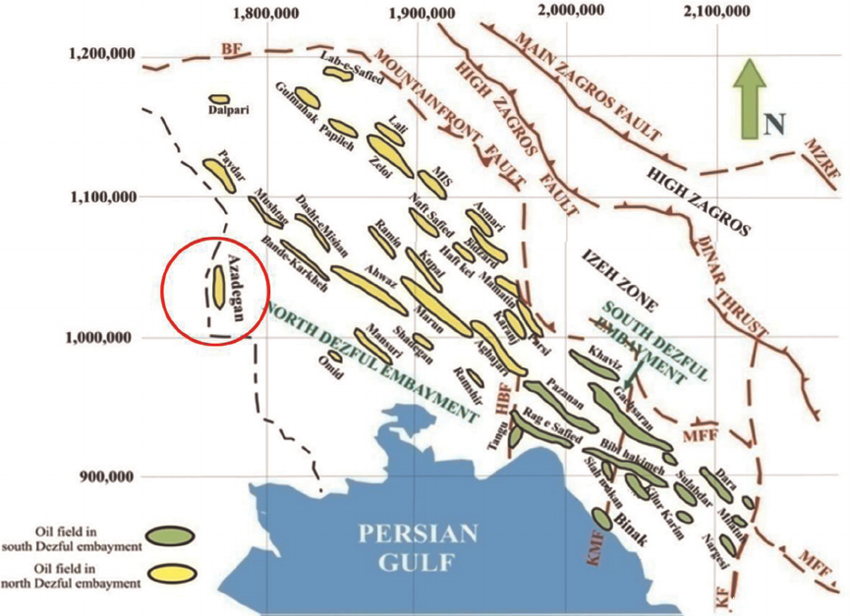
Inpex — which previously held a 75-percent stake in the project but pulled out in 2010 amid US sanctions on Iran — was the first foreign company to sign a memorandum last year on the oilfield which is one of the largest in the world.
However, it has four major rivals — Total SA, Royal Dutch Shell PLC, Petroliam Nasional Bhd (Petronas) and China National Petroleum Corp. — which have also started assessments and begun to send proposals.
“Inpex is one of the good names in the oil industry and as it has experience and data regarding Azadegan, it is one step ahead of its rivals and has a chance to win the Azadegan tender,” Shahnazizadeh said.
Japanese companies have earlier encountered major obstacles in doing business in the Iranian oil and petrochemical industries.
A multibillion-yen petrochemical project by Iran-Japan Petrochemical Company came to an end in 1991 without getting off the ground due to the prolonged Iran-Iraq war.
“There is no remaining conflict between Iran and Japan from the past over Azadegan,” Shahnazizadeh asserted, noting, “We understood Inpex’s situation when they were forced to leave the project, and now they are welcome again.”
According to Shahnazizadeh, Total has already handed over a final proposal for the project, while Inpex and CNPC will submit their presentations soon.
The deal is expected to be completed around the first quarter of 2017, and the contractor will be chosen by summer.
Technical, financial and recovery factors will determine the winning bid, Shahnazizadeh said.
West Karoun oil region, which includes the Azadegan and Yadavaran oilfields, which has a 67-billion-barrel deposit of crude oil, has a contract value of some $25 billion.
About $9 billion has already been invested in West Karoun, but Shahnazizadeh stopped short of specifying how much the Azadegan contract alone is worth.
International companies started negotiations to return to the Iranian market after Iran inked a landmark deal with world powers in 2015 to modify its nuclear activities in return for an end to economic sanctions.
Only companies that Iranian authorities determine as contributing to the transfer of modern technology to Iran are recognized as ‘qualified’.
“Iran expects Japan to transfer and apply the use of modern technology in exploration, drilling and recovering to increase the rate of recovery, which is the most important criteria for Iran,” Shahnazizadeh said.
During heavy sanctions from 2010 to 2015, Iran’s oil production fell to nearly one million barrels per day. Japan nevertheless remained the third-largest importer of Iranian crude oil, after South Korea and China.
Japan was also the only country that accepted insurance risks through the period and transferred oil from Iran on its own vessels — a move that Shahnazizadeh described as ‘unforgettable loyalty’.
The Japanese government signed an investment pact in February to help Japanese companies do business there amid intensifying foreign competition.
Iranian officials said they hope political issues, especially recent changes in the United States, will not negatively impact cooperation between Iran and Japan, as was the case in 2010.
“I believe we will have a very close and friendly relations with Japan in the oil sector in the future, as long as a third party doesn’t impact our relations negatively again,” Shahnazizadeh said.
Apart from Inpex, which is the only Japanese company that has signed a memorandum of understanding in Iran’s oil upstream, five other Japanese companies are recognized as qualified to participate in downstream projects like petrochemical and refinery.
After the lifting of sanctions, Iran’s oil production increased and reached 3.5 mbd within nine months, returning to the same level as in 2011.
Oil industry officials aim to keep increasing output in coordination with multinational companies.
The share of Iran’s oil export to the Japanese oil market increased to 6.6 percent in view of the 49,000 bpd growth in Iran’s oil exports in October.
Iran’s heavy crude oil in the week to December 16 experienced highest increase in price and reached $51.07 a barrel, showing $2.02 increase, IRNA reported.
Iran’s Petroleum Ministry announced that Japan’s crude imports dropped to 67,000 barrels per day in October 2016 compared to the figure for the same month last year and reached 3.055 million barrels per day.
Japan’s imports from Saudi Arabia rose by 205,000 barrels per day in October against the amount for the same month the year before and reached 1.262 million barrels. Saudi Arabia, with a 41-percent share in the country’s imports, is considered the most important crude oil exporter to Japan.
In the period under study, exports of cruse from the UAE to Japan fell by one percent, or 9,000 barrels per day, and reached 688,000 barrels per day.
The UAE, which has a 23-percent share in Japan imports, stands second among crude exporters to the country.
Qatar’s share in Japan’s imports is 7.2 percent. It stands third among oil exporters to Japan.
According to the Petroleum Intelligence Weekly (PIW), export of crude oil to Japan by Kuwait and Iran rose by 22,000 barrels per day and 49,000 barrels per day respectively in October and reached 214,000 barrels per day and 202,000 barrels per day respectively.
Shares of Kuwait and Iran in Japan imports are seven and 6.6 percent respectively. Kuwait and Iran are the fourth and fifth major crude exporters to Japan respectively.
Iran has signed a memorandum of cooperation with two Japanese firms to reduce fuel oil production at Bandar Abbas oil refinery.
Reducing the share of fuel oil from the current 30 percent to less than 10 percent marks one of the key policies pursued in Iran’s crude refining industry in the post-JCPOA era.
Accordingly, numerous negotiations have been conducted with companies from South Korea, Japan and China over the past nine months some of which have led to the signing of a number of MoUs between the two sides.
Consequently, Bandar Abbas Oil Refining Company has inked a joint memorandum of cooperation with a consortium comprising Japanese and Iranian firms.
Managing Director of Bandar Abbas refinery Hasehm Namvar touched upon the latest status of plans to reduce fuel oil production at his company saying “presently, the final stages of feasibility studies and provision of technical and economic justification reports are in progress.”
The official pointed to plans to increase production quality as fuel oil output reduces asserting “upon implementation, the volume of fuel oil production will drop to less than 10 percent with sulfur content of below one percent.”
Namvar said the research phase of the project is being carried out in partnership with foreign companies maintaining “talks were held with Japanese, Korean and Chinese companies while the MoU was finally sealed with a consortium comprising Iranian and Japanese firms.”
Meanwhile, Deputy Oil Minister Abbas Kazemi recently announced that so far seven agreements and contracts have been signed for projects to reduce fuel oil production in existing refineries; “for the case of Bandar Abbas refinery, initial agreement has been reached with two Japanese companies,” he had noted./ MNA
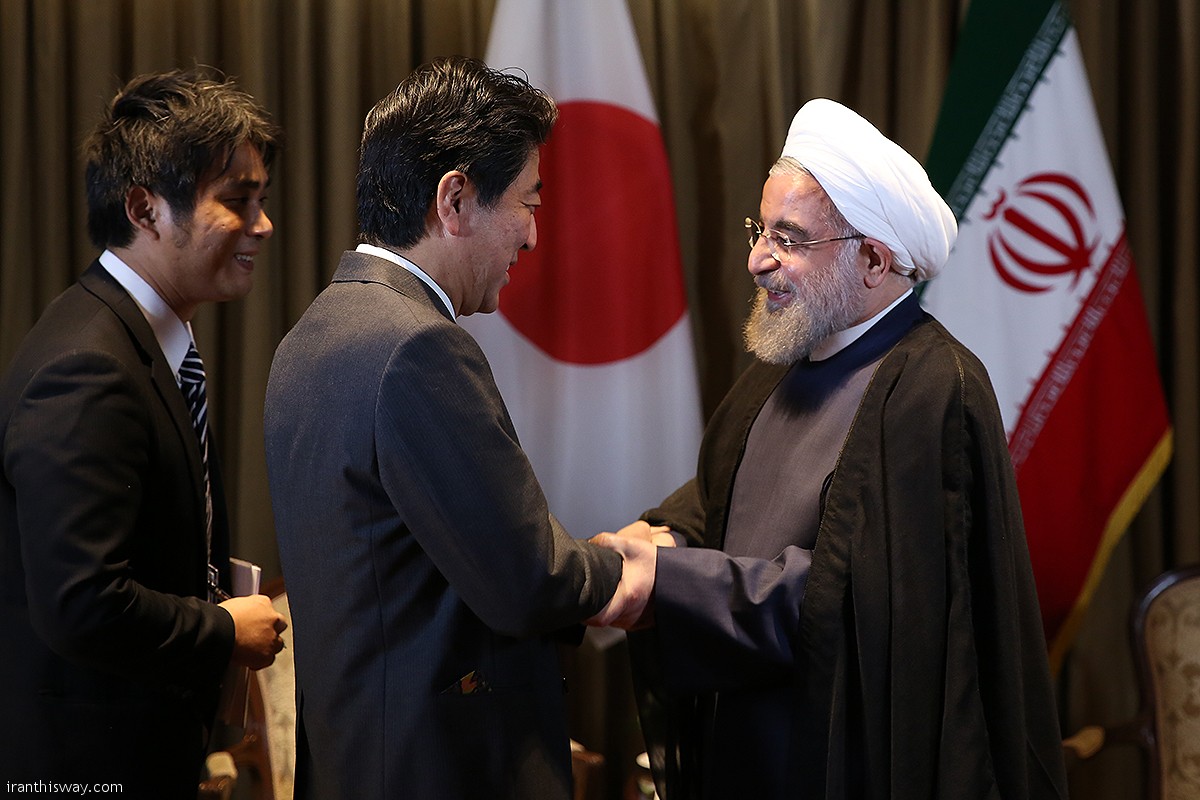
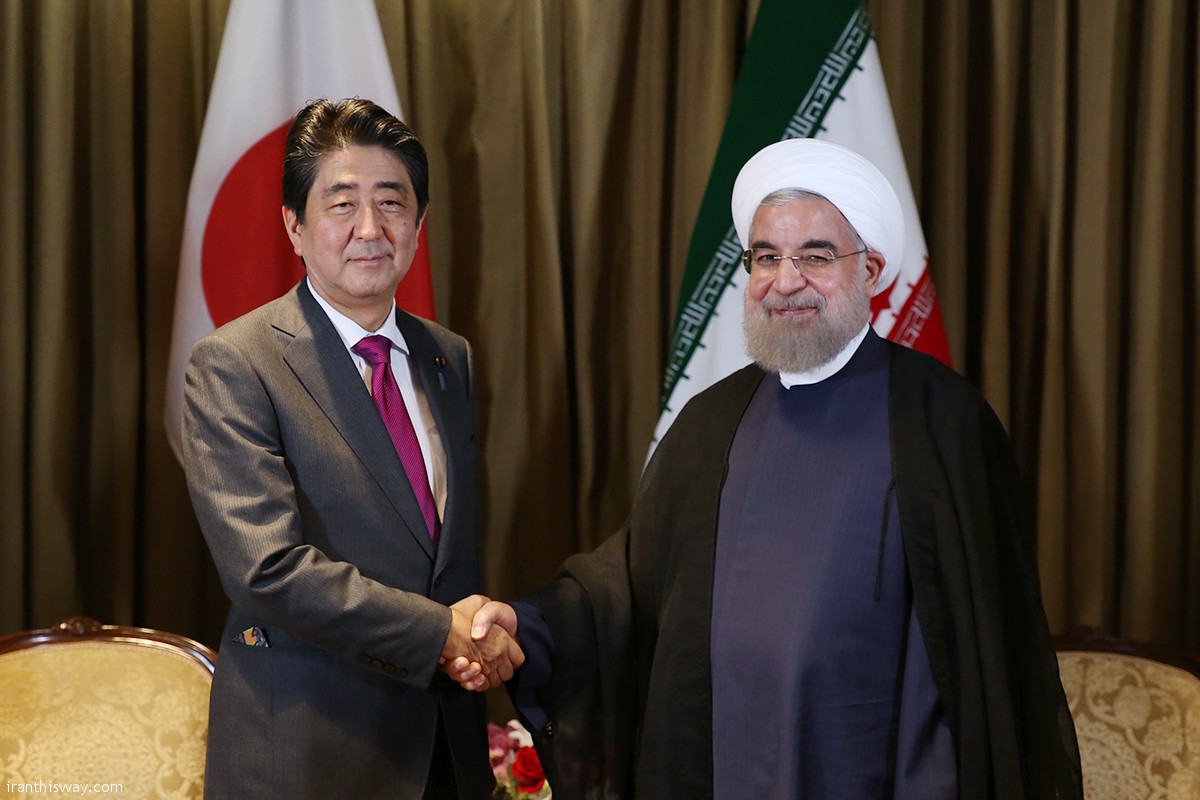
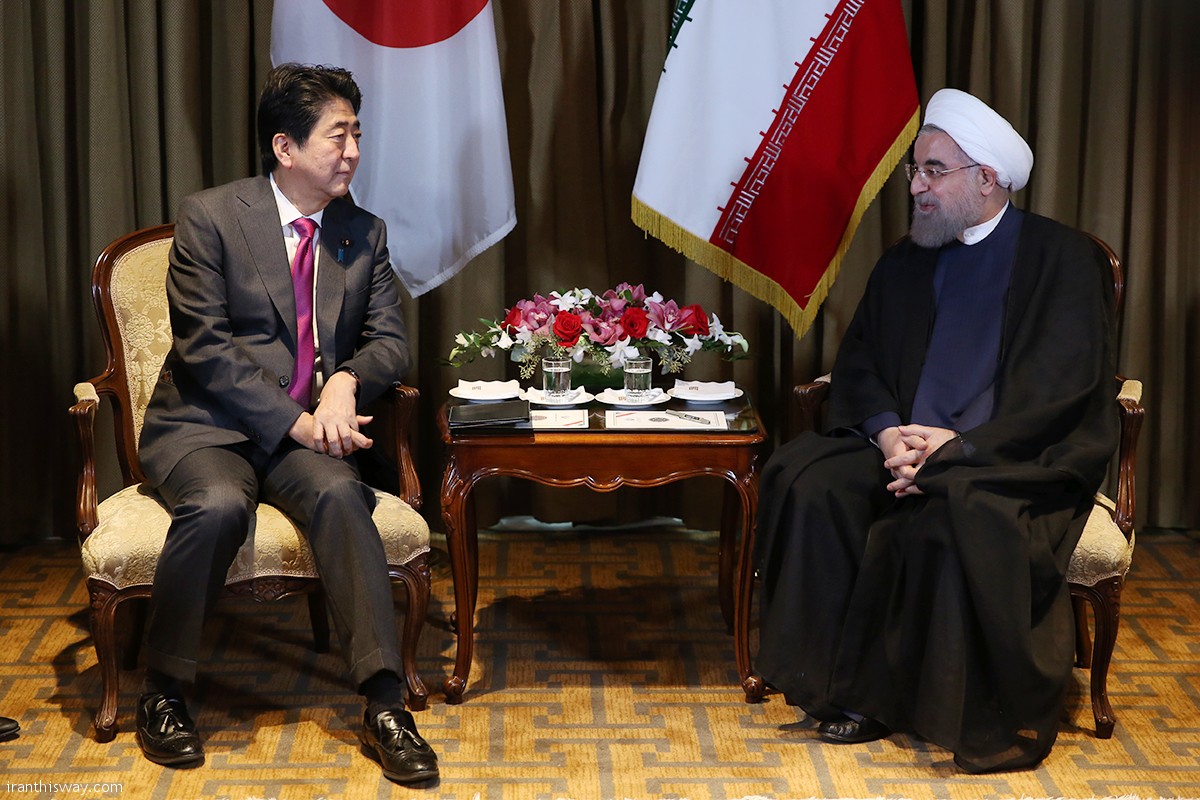
President Hassan Rouhani said on Wednesday that the post-JCPOA era is a proper chance for Iran and Japan to upgrade bilateral cooperation to favorable level.
President Rouhani made the remarks in a meeting with Japanese Prime Minister Shinzo Abe on the sidelines of the 71st session of the UN General Assembly in New York.
President Rouhani voiced Iran’s readiness to prepare ‘a roadmap for economic ties for joint economic cooperation with Japan in the next 10 years.’ The idea was warmly welcomed by the Japanese side, according to IRNA.
He referred to the previous agreements reached during a visit to Japan by Iran’s Minister of Economic Affairs and Finance Ali Tayebnia and said to expedite implementation of the banking credit agreements, the two sides should launch joint efforts.
“Japanese banks need to get activated to address needs in economic relations,” the President stressed.
He welcomed Tehran-Tokyo joint investment and cooperation in various fields including technology, health, medication, scientific activities and environment adding that the opportunity is now available for Tokyo to make investment in Iran’s energy sector like it was used to do in the past.
Noting that Iran and Japan are both victims of Weapons of Mass Destruction, President Rouhani said, “We have always believed that nuclear arms do not provide security and to this end, we proposed the idea of an Atomic weapons-free Middle East for the first time.”
President Rouhani reiterated ‘Tehran’s support for a world free from nuclear arms.”
Touching upon the issue of terrorism and its dangers for the region and the world, president said Iran is the defensive barrier in the region against terrorism and Daesh.
He underlined that in addition to the fight against Terrorists, establishing a durable ceasefire and providing humanitarian assistance are the most important priorities for Yemen and Syria.
Meanwhile, Prime Minister Abe voiced pleasure for meeting with President Rouhani again and said Japan is thankful to Iran’s approach of constructive engagement with the world and strives for expansion of bilateral relations in diversified domains.
Stressing the need for upgrading bilateral cooperation between Tehran and Tokyo, the Japanese official said he wished that bilateral economic relations between the two capitals would reach its highest possible level. To this end, Abe noted, Tehran and Tokyo would continue their cooperation in the field of environment protection and safety of peaceful nuclear activities.
He noted that Tokyo supports banking relations and cooperation of the Japanese companies with Iran’s private sector.
He referred to Iran’s effective and constructive role in providing stability and security in the region and hoped that Tehran would continue with its constructive role to this end.
Renowned Iranian painter and educator Mahmoud Farshchian has passed away, as announced by the Academy of Arts on Saturday. He died at the age of 95 while hospitalized in the United States.
Born in the historic city of Isfahan in 1930, Mahmoud Farshchian was also a member of the Iranian Academy of Arts. His artistic journey began when his father enrolled him in the workshop of Haj Mirza Agha Emami, a prominent traditional artist. He later pursued further studies at the Isfahan School of Fine Arts under the guidance of Master Issa Bahadori.
Farshchian was the pioneer of a unique style and school within Iranian painting. While remaining true to the authentic foundations of this traditional art form, he expanded the horizons of Persian painting through innovative techniques.
Childhood: Nature, beauty, & family Isfahan, Iran 1930 Born in Isfahan in 1930, Mahmoud Farshchian grew up in the proximity of Isfahan’s royal mosque, where the architectural masterpieces of the Safavid dynasty informed his understanding of art and beauty. No place in the world could have provided a better ambiance for the education of a traditional Persian artist. As a child, it was already clear that his life would be devoted to painting.
Ahmadabad & The Chicken House Farshchian’s natural genius was nourished by his family’s deep appreciation for art in all its forms. Farshchian’s family home in the Ahmadabad neighborhood of Isfahan included trees, water fountains, pools, and a section called the Chicken House. His childhood memories of playing with the hens, roosters, pigeons, and sparrows are evident in his masterful depiction of their colors, feathers, and movements. Beyond their physical appearance, Farshchian paid keen attention to their different moods and personalities. “There was this particular white rooster that was so friendly with me,” he remembers.
“I carried food for him in my pocket, and he would push his head into my pocket and eat them.” “When a drop of light falls into the glass of a human soul, what would it create with love?” -M.F.
Home & Family Farshchian’s father Gholamreza was a successful Persian carpet dealer, and the home was furnished with antiques, Cretonne curtains, and many carpets woven by the masters Archang (Ahmad Hartamni) and Mirza. Father would sit, arms crossed, watching in silence for hours as his young son drew the carpets’ lines and patterns. He would just look at me from the corner of his eyes. It was then that I realized the effects of my passion for art in my life. Farshchian’s parents shared a genuine love of God and religion. His mother Zahra would take her children to the Imamzadeh Ismael shrine near their house, where Farshchian would make pencil copies of the shrine’s many paintings of events of Karbala and Ashura. The shrine had a plane tree that was burnt from inside, an image that appears in many of Farshchian’s paintings. A pilgrimage to Karbala in the 1940s affected Farshchian deeply, as revealed in his designs for the new tomb of Imam Hussein decades later.
“I get my art-loving spirit from my father. Although he was a businessman and trader, he admired art….That’s how I developed my passion for art.” -M.F.
Six Months of Darkness At the age of five, Farshchian fell into the courtyard pool and almost drowned. Zahra saved his life by reaching in and pulling him out by his hair. His swirling, circular compositions reflect this harrowing near-death experience. “I have had a brush with death and struck by the evil eye several times in my life.” M.F.
Gholamreza and Zahra were avid readers, and together they amassed a library containing hundreds of rare books and manuscripts. Every Friday, family and friends gathered in the family home to recite The Book of Kings, Saadi, poems, and literary maxims. Once when Farshchian was six years old, he fell and hit his head running upstairs to fetch a Book of Kings from his mother’s reading shelf for his father and their guests. The accident left the young boy completely blind for six months. When the bandages came off, Farshchian experienced a psychedelic rush of colors. His vibrant, rainbow palette reflects his joy upon recovering his sight.
Education: A Young Artist in Golbahar school Farshchian studied with the greatest masters of Persian art and literature in Isfahan. At Golbahar, the prestigious public school he attended, his teachers praised Farshchian’s artistry and encouraged him to study with Haj Mirza Agha Emami, an artist, carpet designer, and giant of Iranian Modernism. Farschian so impressed Haj Mirza with his talent, passion, and humility that he agreed to train the young student.
Haj Mirza Haj Mirza taught Farshchian how to draw a gazelle. “When I got home, I was so excited,” Farshchian recalls. “I stayed up all night and drew about 200 gazelles: big ones, little ones….I felt like something was changing within me.” The next day, he took his portfolio to show the gazelles to Haj Mirza, who could not believe his eyes. He asked if Farshchian had drawn them all by himself or if he had traced them. “No, sir, I’d never do that. I just drew them,” Farshchian answered. Haj Mirza instructed Farshchian to draw a gazelle in his presence. After finishing quickly, Haj Mirza kissed him on the forehead and said, “You’ll become great! Work hard.”
Farshchian became Haj Mirza’s apprentice and continued to draw in pencil for four more years, mostly emulating Timurid and Safavid drawings. Then Farshchian began to study painting. Eventually, the precocious boy was helping carry out the studio’s commissions. The gazelle still holds a special place in Farshchian’s heart and appears throughout his body of work. “I always got a perfect score, 20/20, in drawing, composition, literature, and other abstract lessons. Unfortunately, I was so untalented when it came to math.” -M.F.
School of Fine Arts, Isfahan Farshchian next attended the School of Fine Arts in Isfahan, where he kept the following sentence framed above his desk: “I should become a genius.” He studied miniature painting, drawing inspiration from the designs and tile patterns of Isfahan’s architectural monuments. Farshchian mastered the intricacies of pigments, binding mediums, and prepared his own brushes from white kitten hairs tied into bird quills tools so fine and flexible that he still uses them for delicate passages. Farshchian learned carpet design from the late master Issa Bahadori, who taught “with passion and love.” Farschian’ s artworks were gifted to every celebrity or diplomat who visited Iran. Farschian also passionately studied literature, especially the poetry of Hafiz, Saadi, and Rumi. He and his friends would often attend poetry recitals at the Kamal Ismael Society, the Khakshir Society near the Jame’a Mosque, and the Poets Society behind the Chaharbagh School.
Adulthood: Around the World First Solo Exhibition, 1948 Upon graduation from the School of Fine Arts, Farshchian held his first solo exhibition in 1948 at the Iranian-British Cultural Association’s office in Isfahan.
The Army Like all Iranian boys, he was conscripted into the army at the age of eighteen. In awe of his artistic talent, his comrades and superiors allowed him to skip the drills so he could keep drawing and painting.
Vienna, Munich, & Paris After performing his military service, Farshcian’s hyperpolyglot nature took him on a Grand Tour to absorb Western painting techniques. He enrolled at the Academy of Fine Art in Vienna, taking several trips to cities like Munich and Paris. Wherever he went, he would spend all his time at the museum.
“I was so passionate and thirsty….Every morning I would wait outside museums with my papers and pencils, and I’d go inside when they opened the doors, and I kept drawing and drawing….I continued working ‘till late in the afternoon when they wanted to close the doors.” -M.F.
The Years In Between: Ostad Farshchian
The National Institute of Fine Arts, 1961 In 1961 at the age of thirty, Farshchian returned from his European tour to teach at The National Institute of Fine Arts (later The Ministry of Art and Culture).
The Department of National Arts He organized exhibitions at the University of Tehran, where he rose to the position of Director of the Department of National Arts. He also designed carpets and worked so successfully in Syria that one of his vases was presented to Arthur Pope, the famous American scholar of Iranian art.
Istanbul, 1960: first international exhibit Returning from one of his trips to Europe, Farshchian held exhibitions in the Chechen Sotoun Palace Museum in Isfahan, the Golestan Palace Museum, the Ministry of Art and Culture, University of Tehran, and the Museum of Ancient Iran. Farshchian’s first international exhibition was in 1960 in Istanbul, a watershed moment that sparked multiple exhibitions across the globe. His first exhibitions in the USA were in 1972 and 1973.
Family: A Husband & Father Marriage, 1954 Friends since childhood, Mahmoud and Nia married when she was seventeen and he was twenty-four years old and welcomed two, later to become three, children. The first five years of their marriage were monumental for Farshchian’s career, as during this time she encouraged him to pursue his passion in the studio while she tended to the children, leading to his development and refinement of Surrnaturalism, the unique style for which he would be known.
Women Farshchian drew upon his love for Nia as a constant inspiration for his work, and many of his paintings depict beautiful women in paradisiacal settings.
“I mostly draw women as angels in my work. Kind, compassionate women are indeed like angels. They are precious.” -M.F.
The Iranian Revolution, 1979 The 1979 Iranian Revolution and tumultuous years after became a turning point for Farshchian and his family. With many friends arrested, exiled, and fleeing the country, Farshchian made the decision to leave Iran with his wife and children and began to seek out a new home.
His painting entitled “Quo Vadis/Where Are You Going?” describes the feeling that he, and 20 million other Iranians, had as friends disappeared and communities disintegrated during the revolution that would topple the last shah.
A Modern Master America, 1983 Farshchian retired from teaching in 1980 and relocated to America with his family in 1983, settling in Englewood Cliffs, New Jersey, just across the Hudson River from New York City. There they raised their children and grandchildren and Farshchian continued to paint and take on projects in the U.S.A. and internationally.
Honors & Awards He is included in Cambridge University’s list of the 2000 outstanding intellectuals of the 21st century and The European Academy of Culture’s Who’s Who in the 21st Century. Farshchian belongs to the Art and Professions Association of Italy and has received numerous awards and honorary memberships from universities and art centers across Europe and the USA.
International Acclaim Farschian’s paintings are in the private collections of H.R.H. Queen Elizabeth II of England and Prince Philip, Queen Juliana of Netherlands, Prince Agha Khan, Crown Prince Akihito of Japan, former presidents and prime ministers of the US, France, Italy, Brazil, and India, William Fulbright, Arthur A. Pope; and Michael Jackson, among others.
There have been six books and countless articles published on his work, as he comes to be recognized as playing a decisive role in introducing Iranian art to the international art scene as well as broadening the possibilities and scope of traditional Iranian painting.
The Farshchian Museum In 2001, The Farshchian Museum opened to the public in Isfahan. His works are also permanently installed in Farshchian Hall at The Astan Ghods Razavi Museum and in the Museum of Contemporary Arts, Mashhad. “Art is a sacred matter. It’s a kind of worship. It’s like serving God.” -M.F.
Farewell to Master Mahmoud Farshchian: A Heartfelt Funeral Ceremony in Isfahan
The funeral ceremony for Master Mahmoud Farshchian took place on Sunday evening, August 19, 2025, at the Isfahan School of Fine Arts. The event was attended by Minister of Culture and Islamic Guidance Seyyed Abbas Salehi, along with various officials and members of the public.
The esteemed artist was laid to rest beside the grave of the renowned Iranian poet Saeb Tabrizi.
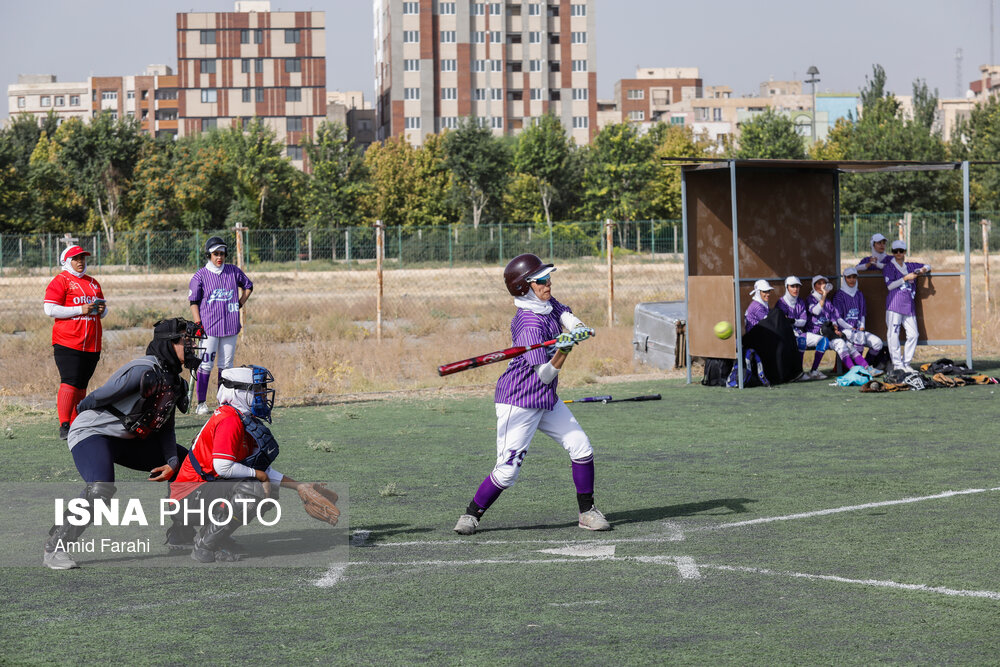
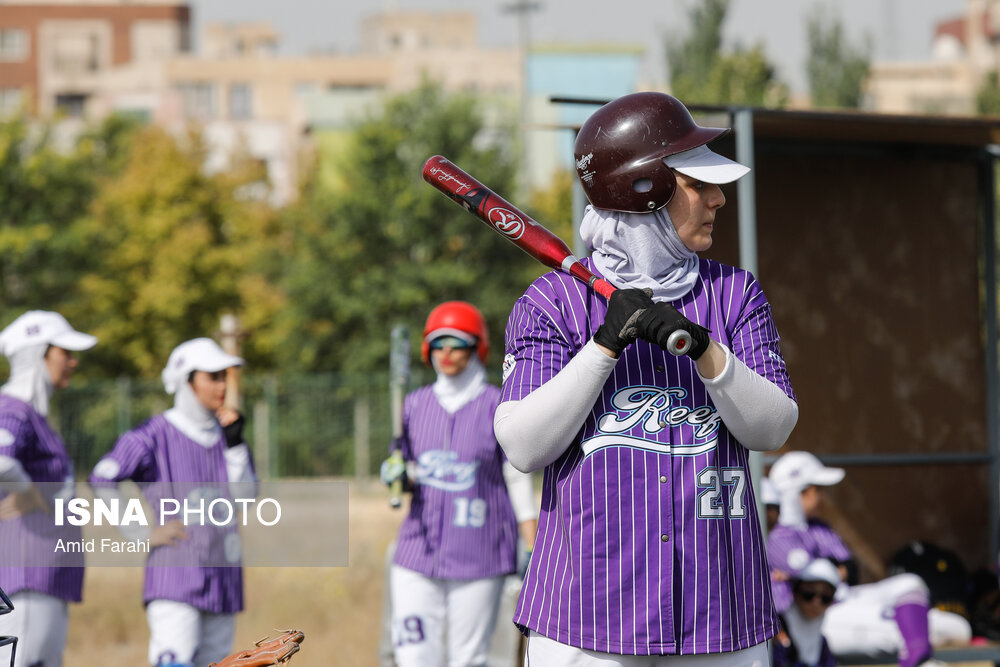
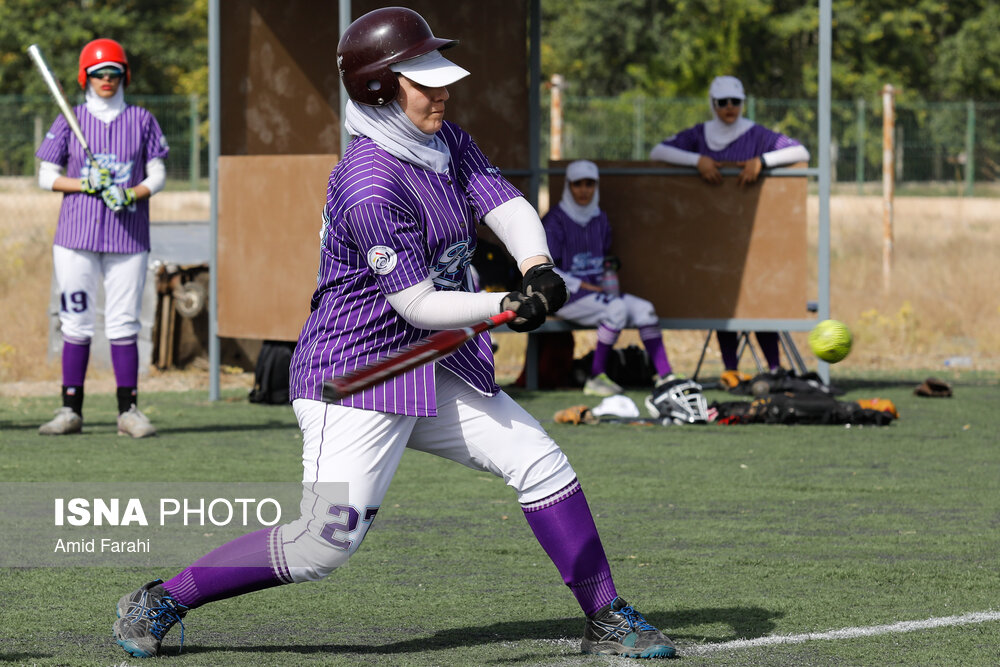
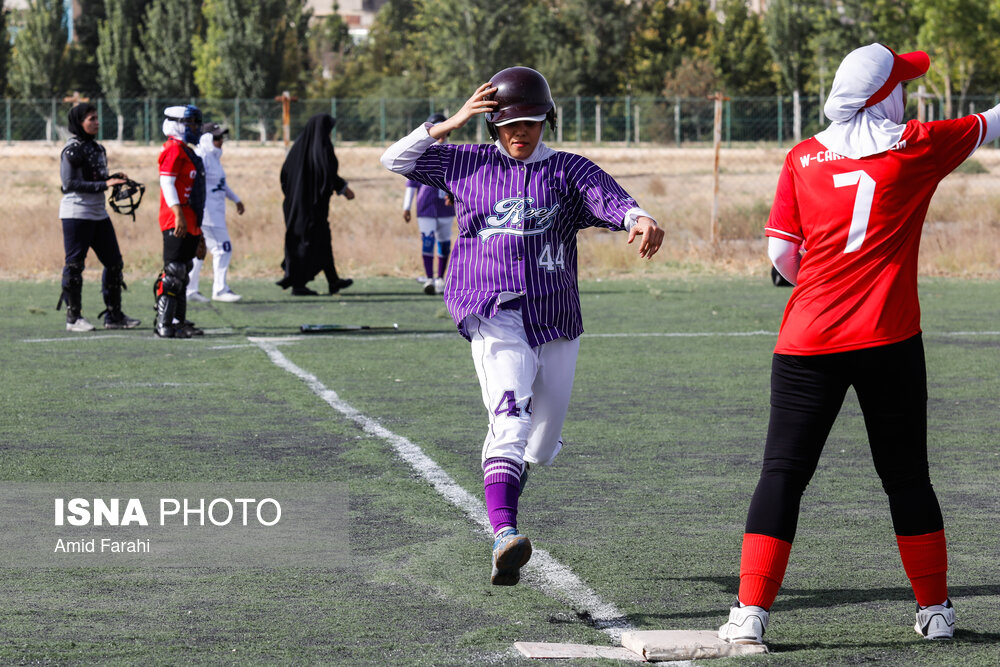
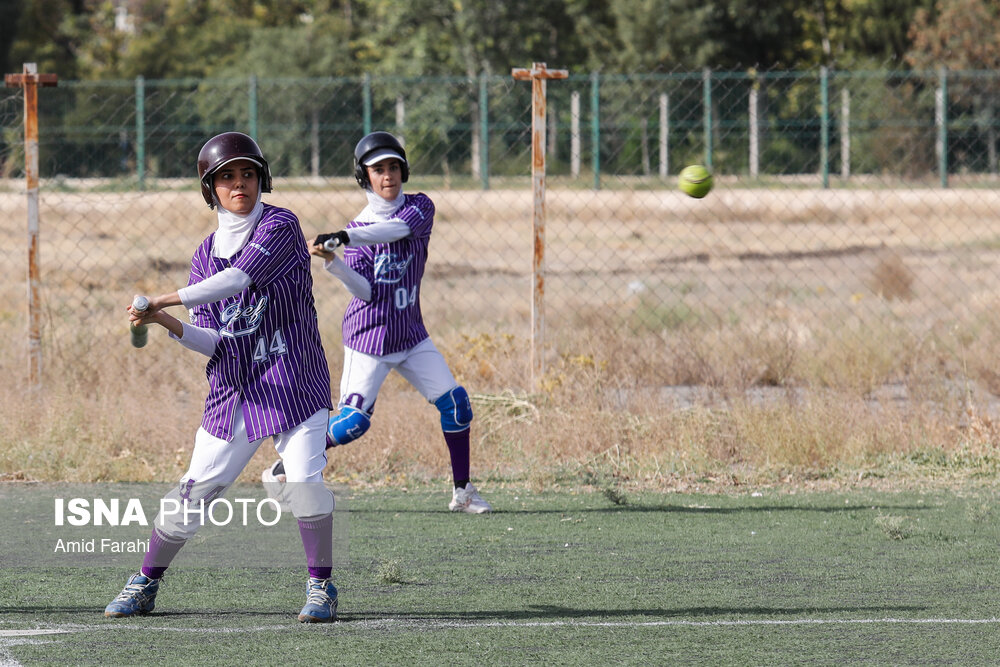
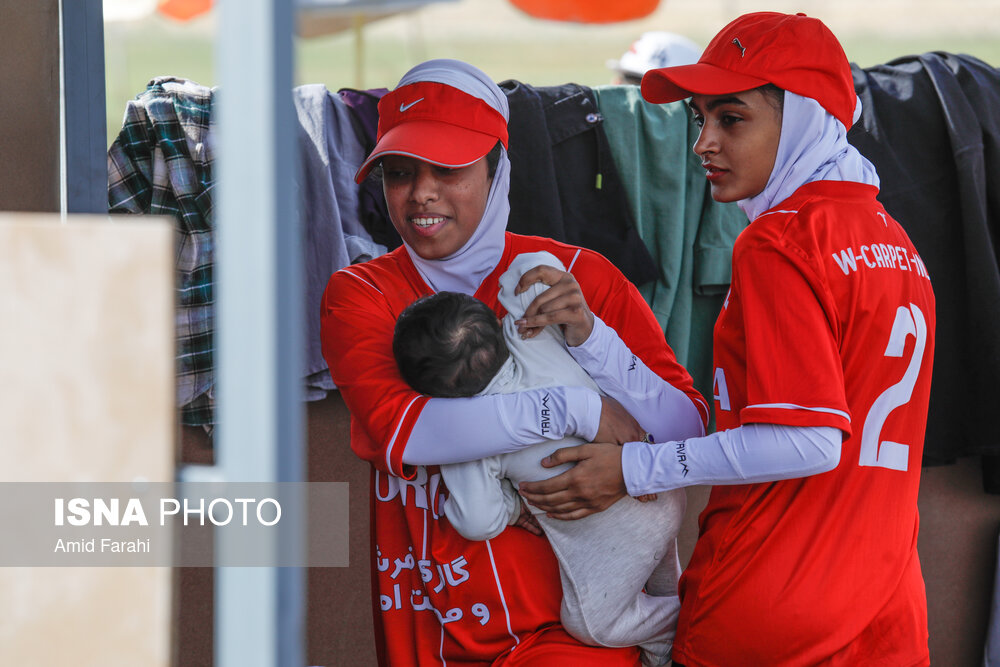
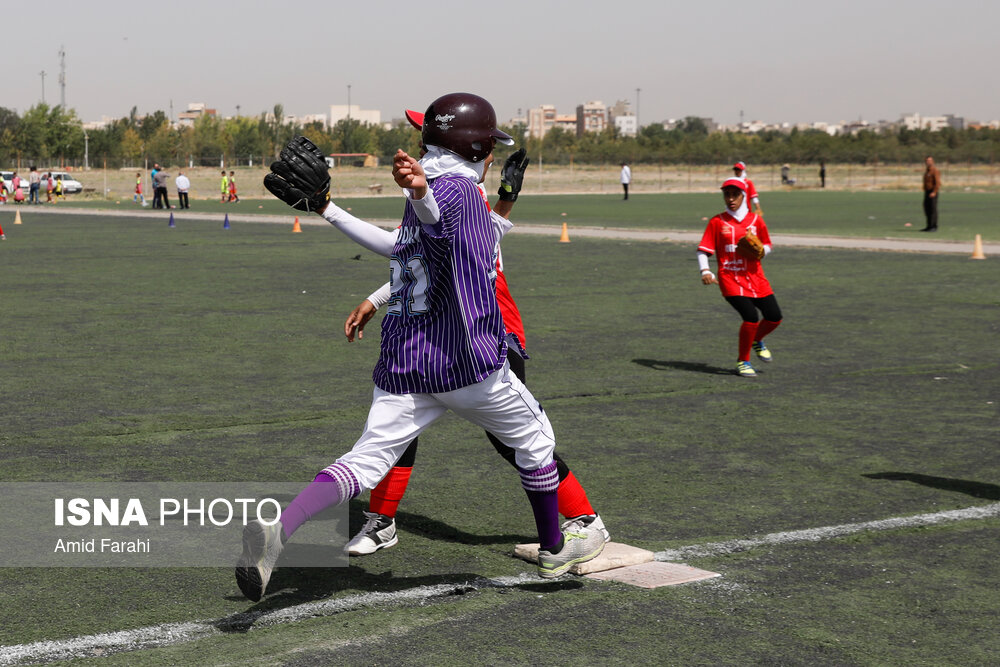
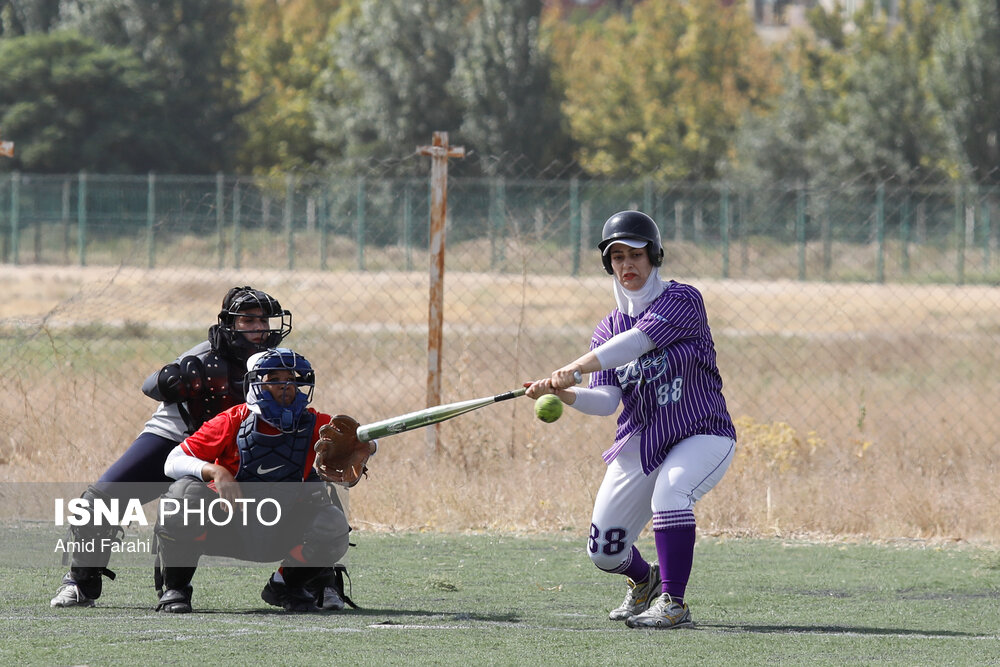
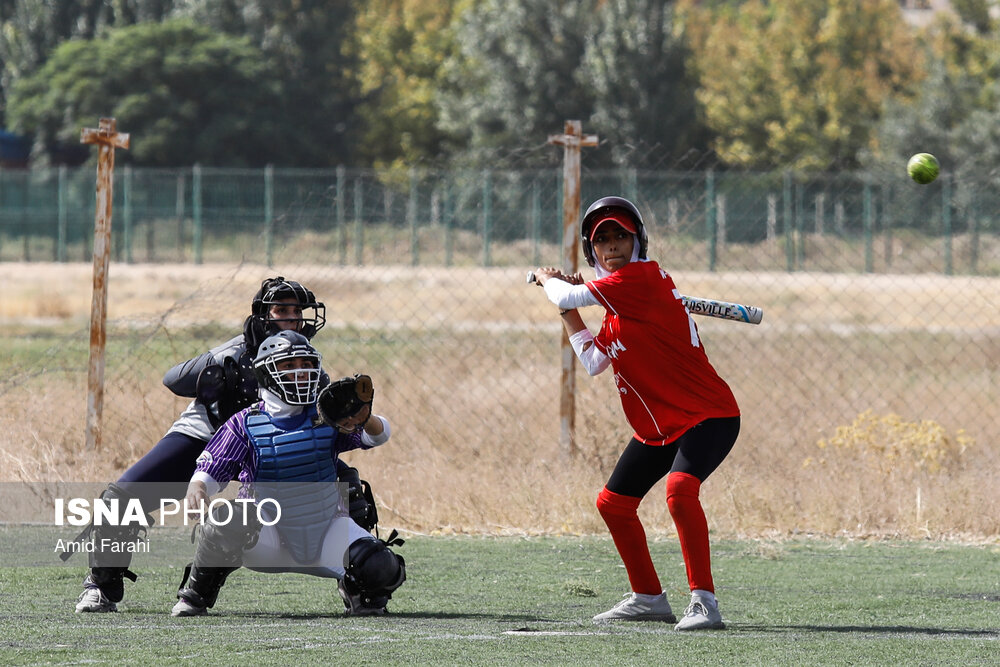
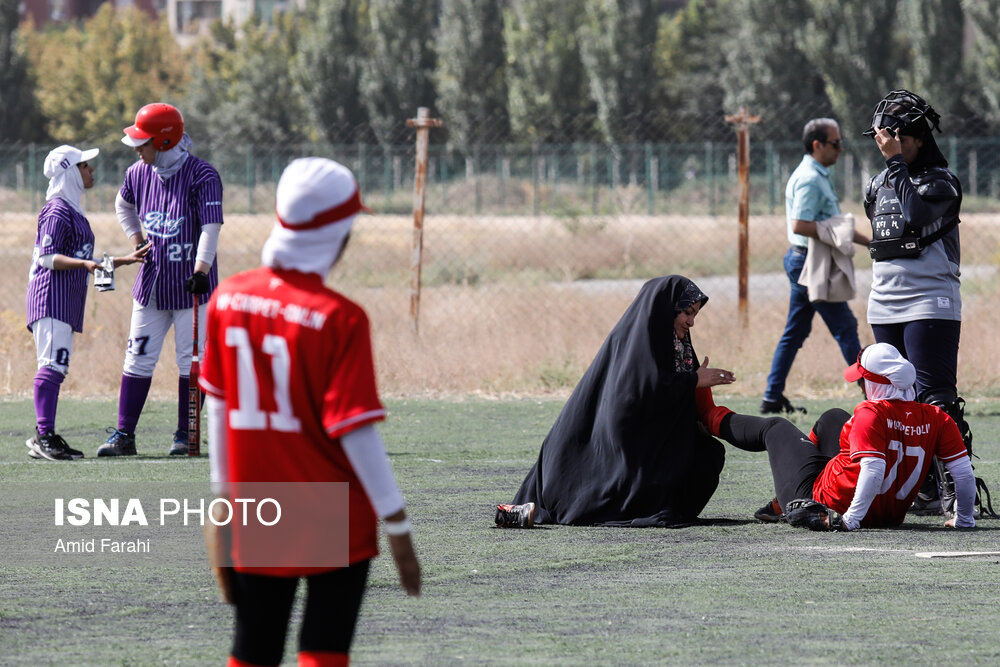
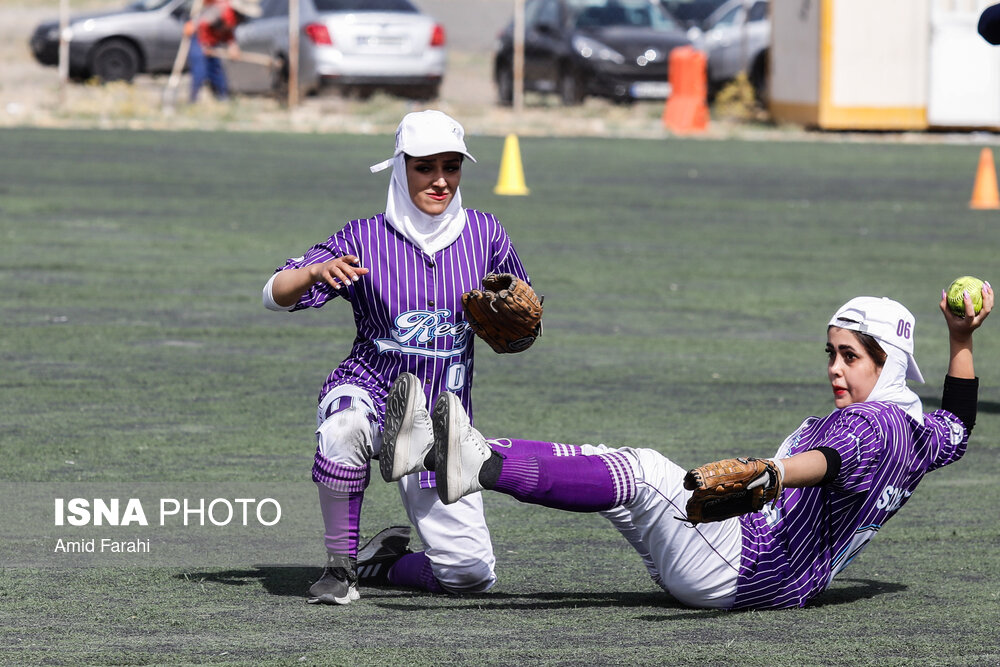
The final stage of the Iran Women’s Softball League, which was held in Tehran, ended with the championship of the “Teif Tehran” team.
“Rif Isfahan” team was second and “Organa Hormozgan” team was third.
Video: Iran women’s softball league final match 2022
Softball was started in Iran in 1997 with the help of Japanese living in Tehran, and today more than 250 female athletes are active in softball in more than 10 provinces.